


Articles
Noise Control Solutions for Residential and Commercial HVAC

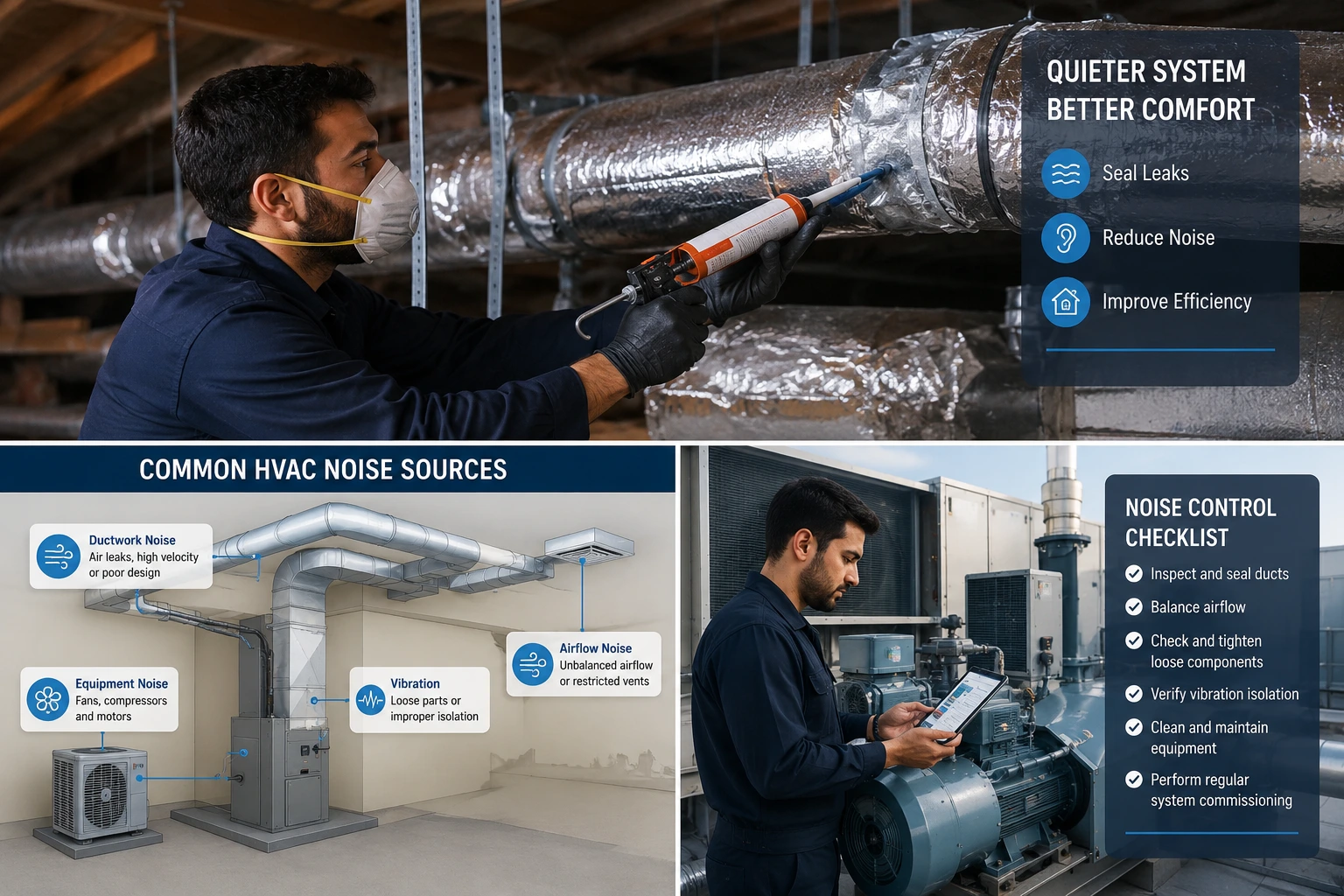
Noise control solutions for HVAC start with one practical idea: find where the sound begins, trace how it travels, and treat the real cause instead of covering up the symptom. A noisy HVAC system is rarely “just noise.” It can point to loose panels, poor duct design, unbalanced airflow, aging bearings, oversized equipment, weak isolation, or air leaks that make residential heating and cooling less comfortable and commercial building comfort harder to maintain.
| Topic | What This Article Covers |
|---|---|
| Main problem | HVAC noise from equipment, airflow, ductwork, and vibration |
| Best first step | Diagnose whether the sound is airborne, structure-borne, or airflow-related |
| Residential focus | Quieter bedrooms, living spaces, returns, registers, and outdoor units |
| Commercial focus | Better tenant comfort, fewer complaints, improved system performance |
| Key solutions | Duct sealing, vibration isolation, air balancing, commissioning, maintenance |
| Long-term result | A quieter HVAC system with better comfort and fewer performance issues |
Why HVAC Noise Happens in the First Place
HVAC noise usually comes from three places: the equipment, the air distribution system, or the building structure. Fans, compressors, chillers, condensers, dampers, diffusers, and ductwork can all generate sound as air moves through or around them. ASHRAE explains the importance clearly:
“HVAC equipment for a building is one of the major sources of building interior noise.”
That matters because sound does not stay neatly inside the mechanical room. It travels through ducts, ceilings, walls, pipes, floors, and even outdoor equipment pads. In a home, that may sound like a low hum in a bedroom or a sharp whistle at a supply register. In an office, hotel, clinic, school, or retail space, it may become background rumble that affects concentration, privacy, or the perceived quality of the building.
ASHRAE describes HVAC noise control through the source-path-receiver concept: the sound begins at a source, travels through an airborne or structure-borne path, and reaches a receiver such as an occupant or outdoor neighbor. Effective noise control addresses all three—not just the grille where the sound is heard.
Common Signs of a Noisy HVAC System
A noisy HVAC system often gives clues before a major failure appears. Rattling may point to loose panels, unsecured duct sections, or vibration transfer. Whistling can indicate restricted airflow, undersized ducts, closed dampers, or dirty filters. A deep rumble may come from fan imbalance, compressor operation, or poorly isolated equipment. Clicking, banging, or popping can be related to thermal expansion in ductwork or control issues.
For homeowners, the most common complaint is noise that interrupts sleep or makes certain rooms uncomfortable. For commercial property managers, the issue is usually broader: tenant complaints, uneven sound levels between zones, distracting conference room noise, or mechanical rooms that transmit vibration into occupied areas.
The best diagnosis begins with simple observation. When does the noise occur? Only at startup? Only during cooling? Only when a specific zone calls? Does it stop when the fan speed changes? These details help separate ductwork noise from mechanical vibration, airflow restriction, or equipment wear.
Duct Sealing and Insulation: Quieting the Hidden Path
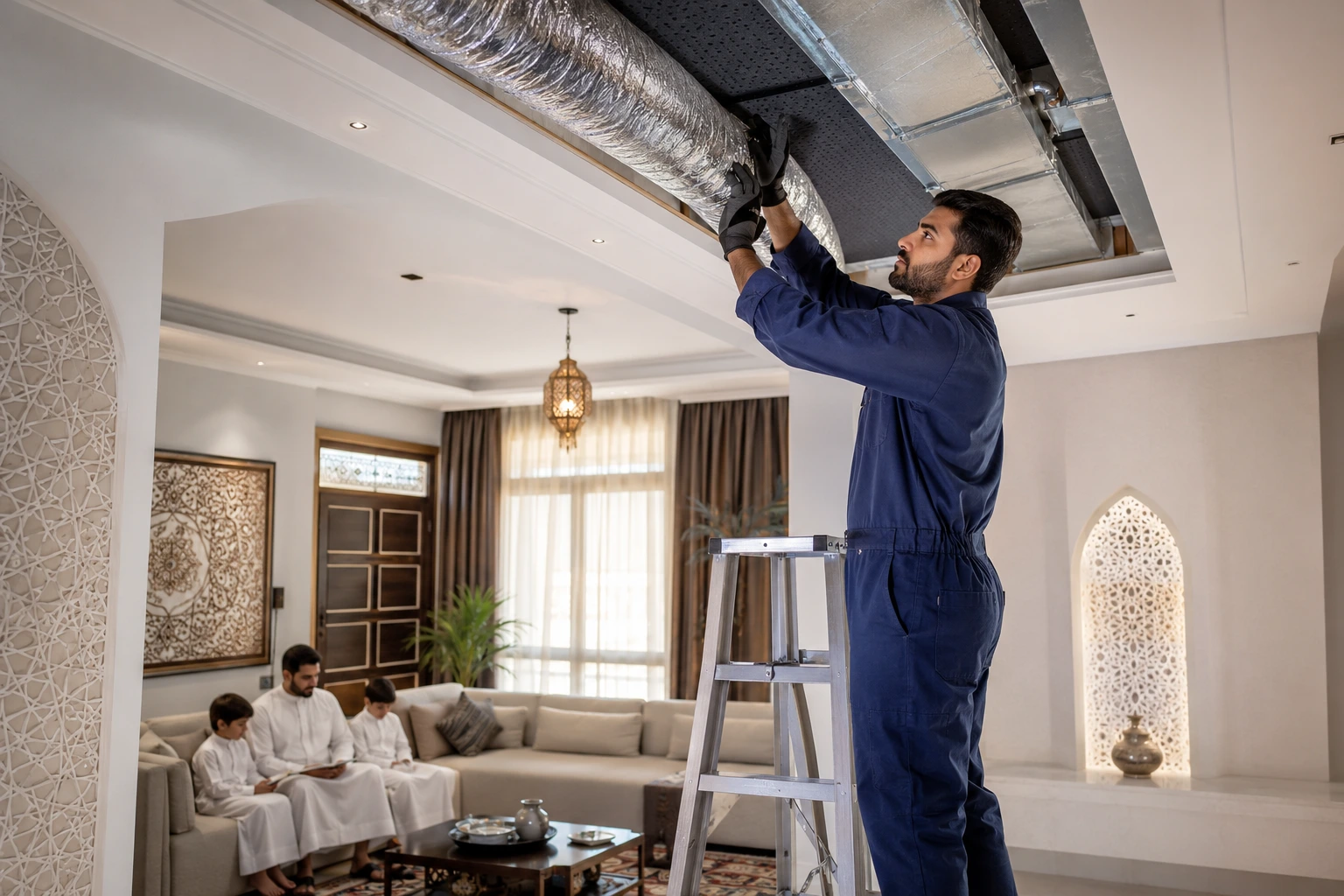
Ductwork noise is one of the most overlooked causes of HVAC complaints. Leaky ducts do more than waste energy; they can create pressure changes, turbulence, whistling, and uneven airflow. ENERGY STAR notes that sealing and insulating ducts can improve heating and cooling efficiency by as much as 20 percent, and sometimes more.
Duct Sealing and Insulation helps in several ways. Sealing joints and seams reduces air leakage that can create hiss and pressure imbalance. Insulation reduces heat gain or loss in unconditioned spaces and can soften breakout noise from sheet metal ducts. In homes, this is especially important for ducts in attics, crawlspaces, garages, and unfinished basements. In commercial buildings, it is critical for long duct runs, ceiling plenums, and spaces near offices or meeting rooms.
ENERGY STAR recommends mastic sealant or metal tape for accessible duct leaks and specifically warns against ordinary duct tape because it is not long-lasting. For soundproofing HVAC ducts, the material choice also matters. Internal duct liner, external duct wrap, flexible connectors, and acoustic elbows can help, but they must be selected with moisture control, cleanliness, and airflow performance in mind. The EPA cautions that when duct board or internal duct lining is used for thermal or acoustical control, designers should consider moisture risks over the life of the system.
HVAC Vibration Control for Homes and Commercial Buildings
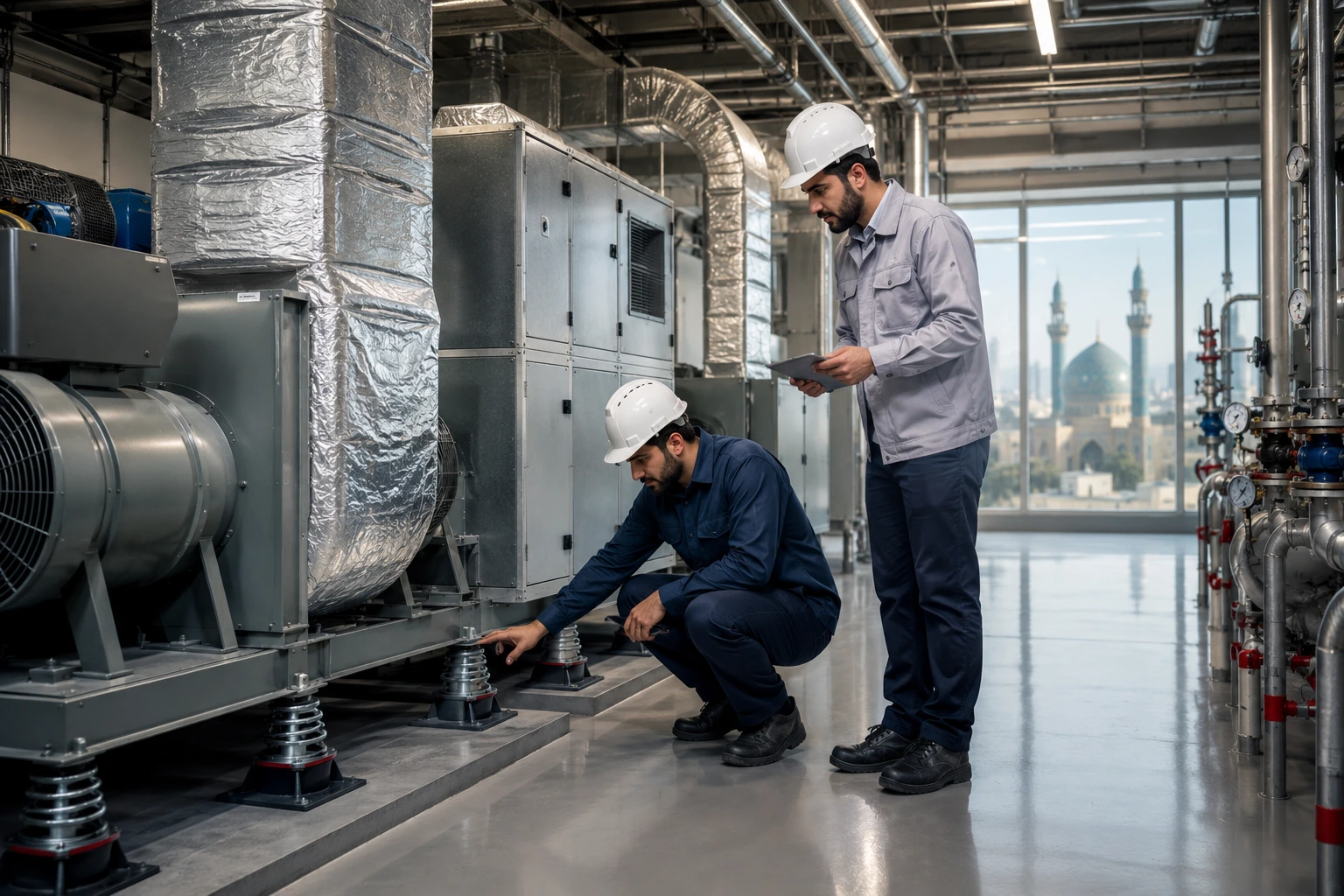
HVAC vibration control is essential when the sound feels like a buzz, hum, or low-frequency rumble. Unlike airborne sound, vibration can move through equipment bases, roof curbs, piping, ducts, and structural framing. Once vibration enters the building structure, walls and floors can radiate it as noise.
Good vibration control includes:
- Spring or neoprene isolators under equipment
- Flexible duct and pipe connectors
- Properly supported refrigerant lines and hydronic piping
- Balanced fans and clean blower wheels
- Solid equipment pads with correct anchoring
- Roof curb isolation for rooftop units
In residential systems, outdoor condensers should sit level, with refrigerant lines secured but not rigidly clamped in a way that transfers vibration indoors. In commercial buildings, vibration isolation should be designed around the equipment weight, speed, location, and structure. A rooftop unit over a storage room may need a different solution than the same unit above a law office, clinic, or hotel room.
Why Air Balancing Matters
Air balancing is one of the most practical ways to reduce HVAC noise while improving comfort. When airflow is too high at a register, occupants hear rushing air. When airflow is too low, rooms drift from setpoint and the system runs longer. When return air is restricted, the fan works harder, static pressure rises, and ductwork noise often increases.
Why Air Balancing Matters is simple: comfort depends on delivering the right amount of air to the right rooms at the right pressure. In a home, that can mean correcting a loud bedroom supply register or a return grille that pulls too aggressively. In a commercial building, it may mean adjusting VAV boxes, dampers, diffusers, and fan speeds so each zone receives the airflow it was designed to receive.
| Noise Symptom | Likely Cause | Practical Solution |
|---|---|---|
| Whistling at vents | High velocity or restricted opening | Adjust dampers, check filter, resize grille |
| Rattling ducts | Loose sheet metal or poor support | Secure ducts, add bracing, seal joints |
| Low rumble | Fan, compressor, or vibration transfer | Balance fan, inspect mounts, add isolation |
| Popping sounds | Duct expansion and contraction | Improve duct support and reduce pressure swings |
| Hissing near ducts | Leakage at seams or joints | Seal with mastic or metal tape |
| Uneven room noise | Poor airflow distribution | Perform air balancing and verify static pressure |
HVAC Commissioning for Long-Term Quiet Performance
Noise control should not be treated as an afterthought at the end of a project. HVAC Commissioning verifies that systems are planned, installed, tested, operated, and maintained according to the owner’s requirements. ASHRAE describes commissioning as a process that validates and documents whether facility elements meet the owner’s objectives and criteria.
For commercial properties, commissioning can catch issues that later become expensive complaints: incorrect fan speeds, poor duct transitions, missing flexible connectors, control sequences that cause hunting, uncalibrated sensors, or VAV boxes operating outside their intended range. For high-end residential projects, commissioning helps confirm that zoning, airflow, refrigerant charge, duct leakage, and thermostat controls work together as designed.
Commissioning is also valuable for existing buildings. Systems change over time. Tenants renovate suites, filters get replaced with higher-resistance models, dampers drift, and control schedules are edited. A building that was quiet five years ago may become noisy because the operating conditions changed.
Maintenance Habits That Keep HVAC Quiet
Noise control is not only a design issue. Maintenance has a direct effect on sound. ENERGY STAR recommends checking filters monthly during heavy-use seasons and changing them at least every three months; dirty filters slow airflow and make the system work harder.
Useful HVAC maintenance tips include cleaning coils, tightening access panels, checking belts, lubricating bearings where applicable, inspecting fan wheels, clearing debris around outdoor units, confirming refrigerant charge, and reviewing electrical components. In commercial buildings, maintenance teams should also trend static pressure, fan speed, temperature complaints, and equipment runtime. Noise often increases gradually, so performance data can reveal problems before occupants notice them.
A quiet HVAC system is usually a well-maintained system. When airflow is clean, fans are balanced, ducts are sealed, and equipment is operating within design limits, noise complaints drop naturally.
Selecting the Right Refrigerant and System Design
Selecting the Right Refrigerant may not sound like a noise-control decision at first, but it affects equipment design, compressor behavior, efficiency, safety classification, and long-term service planning. ASHRAE Standard 34 assigns refrigerant safety classifications based on toxicity and flammability data, while Standard 15 addresses safe design, installation, and operation of refrigeration systems.
Regulations are also changing the equipment landscape. The EPA states that, beginning January 1, 2025, certain technologies may no longer use high-GWP HFCs or HFC blends, with restrictions applying to manufacture, distribution, sale, installation, import, export, and some new systems.
For homeowners, this means replacement decisions should consider more than the outdoor unit’s decibel rating. For commercial property managers, refrigerant choice should be part of a broader conversation about code compliance, service availability, lifecycle cost, safety requirements, efficiency, and acoustic performance.
Residential HVAC Noise Control Priorities
In homes, the goal is personal comfort. Bedrooms, nurseries, home offices, and living rooms need low, steady background sound without sudden rattles or sharp airflow noise. The most effective residential heating and cooling improvements usually include sealing accessible ducts, replacing restrictive grilles, correcting return-air problems, isolating the outdoor unit, and choosing properly sized equipment.
Oversized equipment can create comfort and noise issues because it may cycle frequently and move air too aggressively through ductwork. A smaller, properly selected system with variable-speed operation may feel quieter because it runs longer at lower output instead of blasting air in short cycles.
Commercial Building Comfort and Acoustic Expectations
Commercial building comfort depends on consistency. Occupants may tolerate a gentle, steady background sound, but they quickly notice tonal noise, vibration, drafts, and rooms that sound different from nearby spaces. Offices, schools, healthcare facilities, hotels, restaurants, and mixed-use buildings each need different acoustic targets.
For property managers, the best approach is preventive. Include acoustic requirements in equipment specifications. Keep mechanical rooms separated from sensitive spaces. Require vibration isolation details. Verify airflow during commissioning. Review noise complaints by location and schedule, not just by equipment name. A complaint from one conference room may reveal a duct routing issue, while complaints across a floor may point to fan speed or static pressure.
The Quiet System Playbook
A quiet HVAC system is built through layered decisions, not one magic product. Start with proper equipment selection. Keep duct layouts smooth and well-supported. Seal leaks. Insulate where sound or temperature transfer is a problem. Balance airflow. Isolate vibration. Commission the system. Maintain it before small sounds become large repairs.
For homes, the reward is calmer daily comfort. For commercial buildings, it is fewer complaints, better tenant experience, and a system that performs closer to design intent. The best noise control solutions for HVAC are not just about silence; they protect comfort, efficiency, equipment life, and the way people feel inside the building.