

Articles
Combining Solar Power with HVAC Systems to Cut Energy Costs

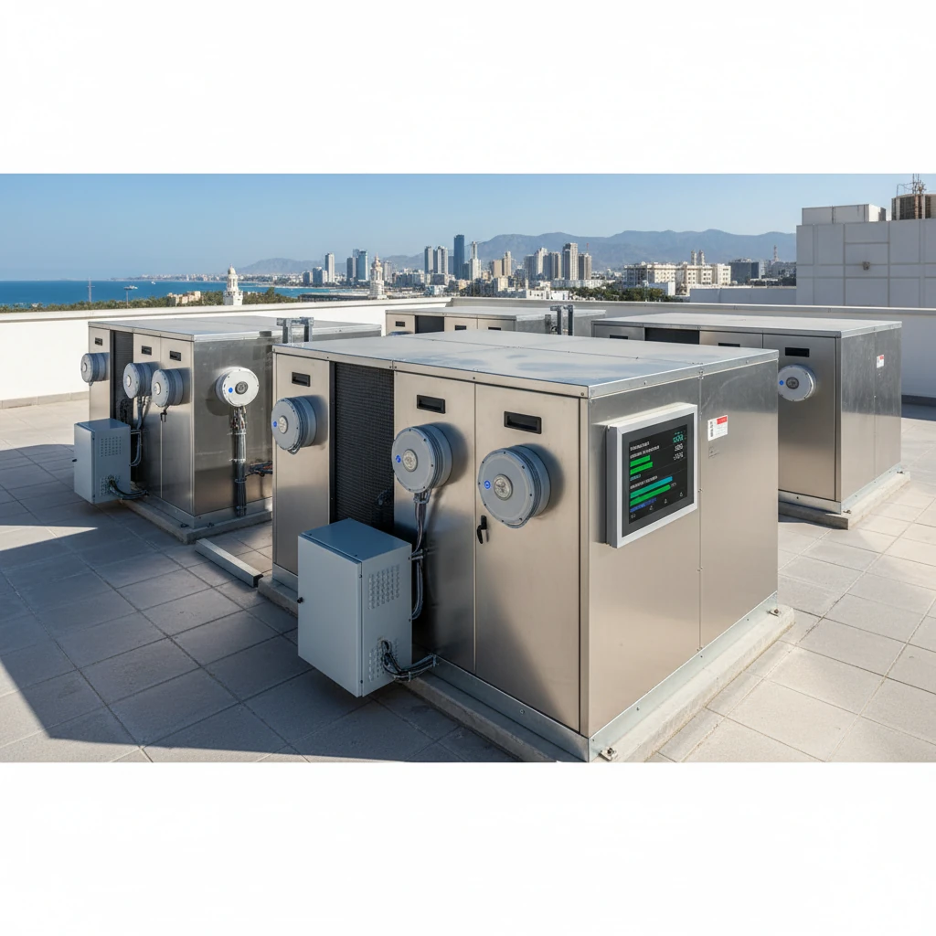
For homeowners and building managers in Muscat, reducing electricity consumption is becoming a serious priority. Air conditioning and ventilation systems are responsible for the largest portion of energy use in most buildings across the Gulf. That is why Combining Solar Power with HVAC Systems is quickly gaining attention as a practical way to cut operational costs while maintaining indoor comfort in extreme climates. By integrating solar generation with modern HVAC technology, properties can offset cooling loads, stabilize energy expenses, and improve long‑term sustainability without sacrificing performance during Muscat’s intense summers.
Why Solar + HVAC Makes Sense in Muscat
In Muscat, cooling systems often run for most of the year. Temperatures regularly exceed 40°C in summer, and coastal humidity increases the cooling demand even further. These conditions mean HVAC systems operate longer and consume more electricity compared to many other regions.
Because of this, Combining Solar Power with HVAC Systems offers a logical solution. Solar production peaks during the day—the exact time when cooling demand is highest. Instead of relying entirely on the electrical grid, buildings can generate part of the energy required for compressors, air handlers, and pumps. This alignment between solar generation and cooling demand is one reason solar‑assisted HVAC is becoming one of the most promising Emerging HVAC Trends in the Gulf region.
According to the International Energy Agency, solar technologies are particularly effective in regions with strong sunlight. As noted by the International Energy Agency:
“Solar power is one of the most effective energy resources for regions with high solar irradiation, providing reliable daytime electricity generation that aligns with peak demand.”
For Muscat properties, that alignment is especially valuable.
Understanding How Solar Works with HVAC Systems
To understand the potential benefits, it helps to look at how the integration works. In most buildings, solar panels generate electricity that feeds directly into the building’s electrical system. HVAC equipment then uses this electricity the same way it would use grid power. There are three main integration models used today:
- Grid‑Connected Solar Systems
- Solar with Battery Storage
- Direct Solar‑Driven HVAC Systems
Each approach has different advantages depending on building size and energy demand.
Grid-Connected Solar
This is the most common system in residential villas and commercial buildings. Solar panels generate electricity during the day, reducing the amount of power drawn from the grid. Advantages include:
- Lower installation complexity
- Lower upfront investment
- Immediate reduction in electricity bills
Solar with Energy Storage
Battery storage allows excess solar energy produced during the day to be stored and used later. Benefits include:
- Backup power during outages
- Better energy management at night
- Reduced dependence on peak electricity tariffs
Direct Solar HVAC
Some systems directly connect solar generation with HVAC compressors or chillers. These specialized systems are still developing but represent an exciting direction for Combining Solar Power with HVAC Systems.
Why Cooling Loads Are Perfect for Solar Integration
Solar power works best when energy demand peaks during sunlight hours. In Muscat, cooling demand increases precisely when solar generation is strongest.
This natural alignment offers several advantages:
- Lower daytime electricity consumption
- Reduced pressure on building transformers
- Less strain on utility infrastructure
- More stable operating costs
In many commercial buildings, HVAC systems account for 50–70% of total electricity consumption. Even partial solar offset can significantly reduce operating expenses.
The Role of Extreme Climate Engineering
The Gulf region presents special engineering challenges. Solar panels and HVAC equipment must operate reliably despite heat, dust, and humidity. This is where Extreme Climate HVAC design becomes important. Systems must be selected with durability in mind, including:
- corrosion‑resistant outdoor units
- high‑temperature compressor protection
- enhanced filtration against dust
- reliable inverter drives
Solar panels must also be installed with proper airflow and cleaning access to prevent performance loss from dust accumulation. Without proper planning, solar generation efficiency can decline quickly in desert environments.
Managing Humidity in Coastal Cities
Muscat’s coastal climate introduces another challenge: moisture.
Even when the temperature is comfortable, high humidity can create uncomfortable indoor conditions. Effective Humidity Control in Coastal Climates HVAC requires careful system design. Solar integration does not replace the need for humidity management, but it can support systems that run longer at lower energy cost.
For example:
- variable-speed compressors
- reheat systems
- dedicated dehumidification cycles
These technologies require electricity. Solar power can help offset that energy demand while maintaining indoor air quality.
Cost Considerations for Muscat Property Owners
Many property owners ask the same question: does solar really reduce HVAC costs? The answer depends on building size, cooling demand, and system design. However, several factors make solar particularly attractive in Muscat.
Typical cost drivers
- electricity consumption during summer
- system runtime hours
- building insulation performance
- HVAC equipment efficiency
By reducing daytime electricity use, Combining Solar Power with HVAC Systems can lower long‑term operational costs.
Simplified Cost Comparison
|
Factor |
Traditional HVAC | Solar + HVAC Integration |
| Electricity consumption | Fully grid dependent |
Partially solar powered |
|
Peak daytime costs |
High | Reduced |
| Long‑term operating cost | Higher |
Lower |
|
Environmental impact |
Higher emissions | Lower carbon footprint |
| Energy resilience | Limited |
Improved |
This comparison explains why solar‑supported cooling is becoming more common across residential developments and commercial projects.
Maintenance Considerations
One misconception about solar integration is that it eliminates maintenance requirements. In reality, both solar systems and HVAC equipment require regular service. Understanding HVAC Maintenance Cost in Muscat is essential when evaluating system upgrades. Maintenance considerations include:
- coil cleaning due to dust accumulation
- filter replacement
- solar panel cleaning
- inverter inspection
- electrical connection checks
Regular servicing keeps efficiency high and prevents small issues from becoming expensive failures. In many Muscat properties, proper maintenance planning is the difference between a system that performs efficiently for years and one that becomes unreliable after a short time.
Troubleshooting Integrated Systems
When solar and HVAC technologies work together, diagnosing problems can require a structured approach. This is where a professional HVAC troubleshooting guide becomes important.
Common issues may include:
- Reduced cooling output during peak hours
- Solar inverter faults
- airflow restrictions
- sensor calibration problems
- compressor overload protection
Troubleshooting usually begins with checking the simplest factors first, such as airflow, thermostat settings, and electrical supply. From there, technicians move toward system controls and solar inverter performance. This systematic approach prevents unnecessary component replacement and reduces repair costs.
The Role of Professional Integration
While solar panels themselves are relatively straightforward technology, integrating them with building mechanical systems requires expertise.
Proper system planning involves:
- load analysis
- solar capacity calculation
- electrical integration
- HVAC performance optimization
For complex installations in Oman, experienced companies such as Filabico often assist with mechanical system planning and climate‑specific equipment selection. Their understanding of local environmental conditions helps ensure that both HVAC equipment and solar components perform reliably in coastal Gulf climates.
How Solar Integration Fits into Future HVAC Trends
Solar‑assisted cooling is not an isolated development. It is part of a broader shift in building engineering.
Modern HVAC design is increasingly focused on:
- energy efficiency
- climate adaptation
- intelligent control systems
- renewable energy integration
These priorities are shaping the future of building technology across the Middle East.
As highlighted by the U.S. Department of Energy, integrating renewable energy with building systems plays a major role in reducing energy demand. According to the U.S. Department of Energy:
“Renewable energy technologies combined with high‑efficiency HVAC systems can significantly reduce building energy consumption and long‑term operating costs.”
For rapidly growing cities in the Gulf, that approach is becoming increasingly relevant.
Practical Tips for Muscat Homeowners and Building Managers
If you are considering solar integration with your cooling system, several practical steps can improve results.
- Start with an energy audit
Understanding how much energy your HVAC system consumes is the first step toward designing an effective solar solution.
- Evaluate roof space and solar exposure
Solar output depends on available installation area and sunlight exposure.
- Check HVAC efficiency first
Upgrading inefficient HVAC equipment may provide larger savings than solar alone.
- Plan for maintenance
Dust and humidity require regular cleaning and inspection of both solar panels and cooling equipment.
These steps help ensure that Combining Solar Power with HVAC Systems delivers real financial benefits rather than becoming an underperforming investment.
The Future of Energy‑Efficient Cooling in the Gulf
Cities like Muscat are moving toward smarter, more sustainable building technologies. Solar integration with HVAC systems represents a major step in that direction.
With high solar availability, long cooling seasons, and increasing attention to energy efficiency, the combination of renewable power and modern HVAC design offers a practical path forward.
As building owners seek ways to control operating costs while maintaining indoor comfort, solar‑supported cooling is likely to become a standard feature of new developments and building retrofits across the Gulf.
For properties facing rising energy demand and challenging climate conditions, the logic behind Combining Solar Power with HVAC Systems continues to grow stronger each year.