

Articles
Duct Sealing and Insulation: Hidden Keys to Energy Savings

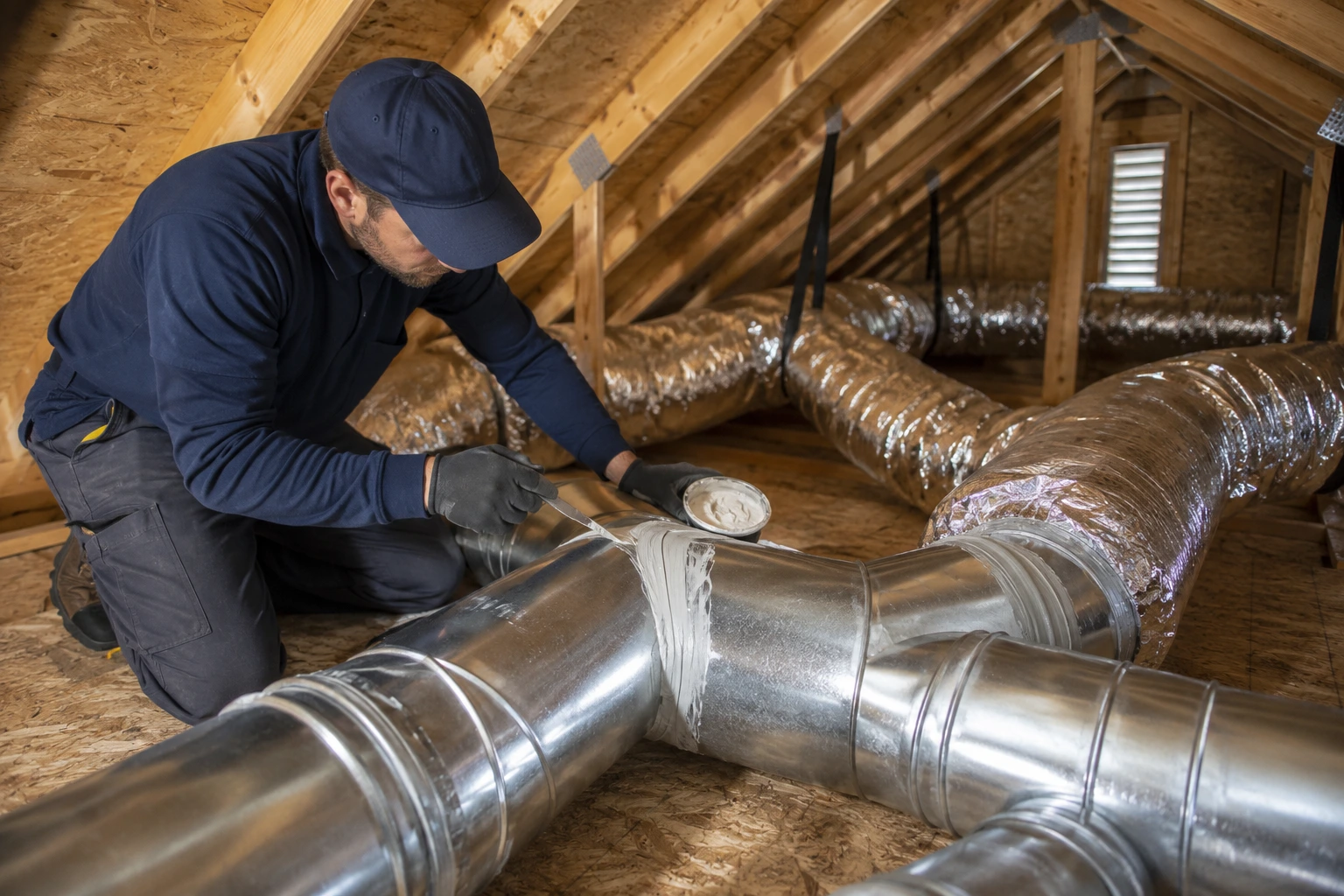
Duct sealing and insulation can quietly solve one of the most expensive comfort problems in a home: conditioned air escaping before it ever reaches the rooms where people live. When leaky ductwork runs through an attic, crawl space, garage, or unfinished basement, the HVAC system works harder, rooms feel uneven, and heating and cooling costs rise for no good reason. Sealing the leaks and insulating exposed ducts helps more of the paid-for air arrive where it belongs.
| Key Point | What It Means for Homeowners |
|---|---|
| Biggest issue | Leaks, loose joints, gaps, crushed flex duct, and poorly insulated runs |
| Main benefit | Better HVAC efficiency and lower energy waste |
| Comfort impact | Fewer hot and cold rooms, steadier airflow, improved indoor comfort |
| Best locations to check | Attics, crawl spaces, basements, garages, and duct boots |
| DIY-friendly tasks | Sealing accessible joints with mastic or approved foil tape |
| Pro-level tasks | Pressure testing, major duct repair, duct redesign, and airflow balancing |
Why duct problems cost more than most homeowners realize
A forced-air HVAC system depends on ducts the same way the body depends on blood vessels. The equipment may be efficient, newly serviced, and correctly sized, but the whole system underperforms when the duct network leaks or loses heat along the way. ENERGY STAR puts the problem in plain numbers. As noted by ENERGY STAR:
“about 20 to 30 percent of the air that moves through the duct system is lost due to leaks, holes, and poorly connected ducts.”
That loss shows up in everyday ways: a bedroom that never cools down, a living room that feels drafty, dust around supply registers, or a system that seems to run constantly. In many homes, the issue is not the furnace or air conditioner. It is the delivery system.
What duct sealing actually does
Duct sealing closes the gaps that let heated or cooled air escape. These gaps often form at seams, elbows, branch connections, plenums, and duct boots where the duct meets the floor, wall, or ceiling.
Professional duct sealing may include diagnostic testing to measure leakage before and after repairs. A contractor may use a duct blaster, pressure readings, smoke pencils, or thermal imaging to locate hidden problems. For accessible areas, homeowners can often spot obvious issues: disconnected flex duct, torn insulation, rusted metal seams, loose tape, or dirty streaks near joints where air has been escaping.
ENERGY STAR recommends sealing accessible leaks with mastic sealant or metal-backed foil tape and insulating ducts in unconditioned spaces such as attics, crawl spaces, unfinished basements, and garages. It also warns against standard gray duct tape because it does not last on HVAC ductwork.
Why air duct insulation matters after sealing
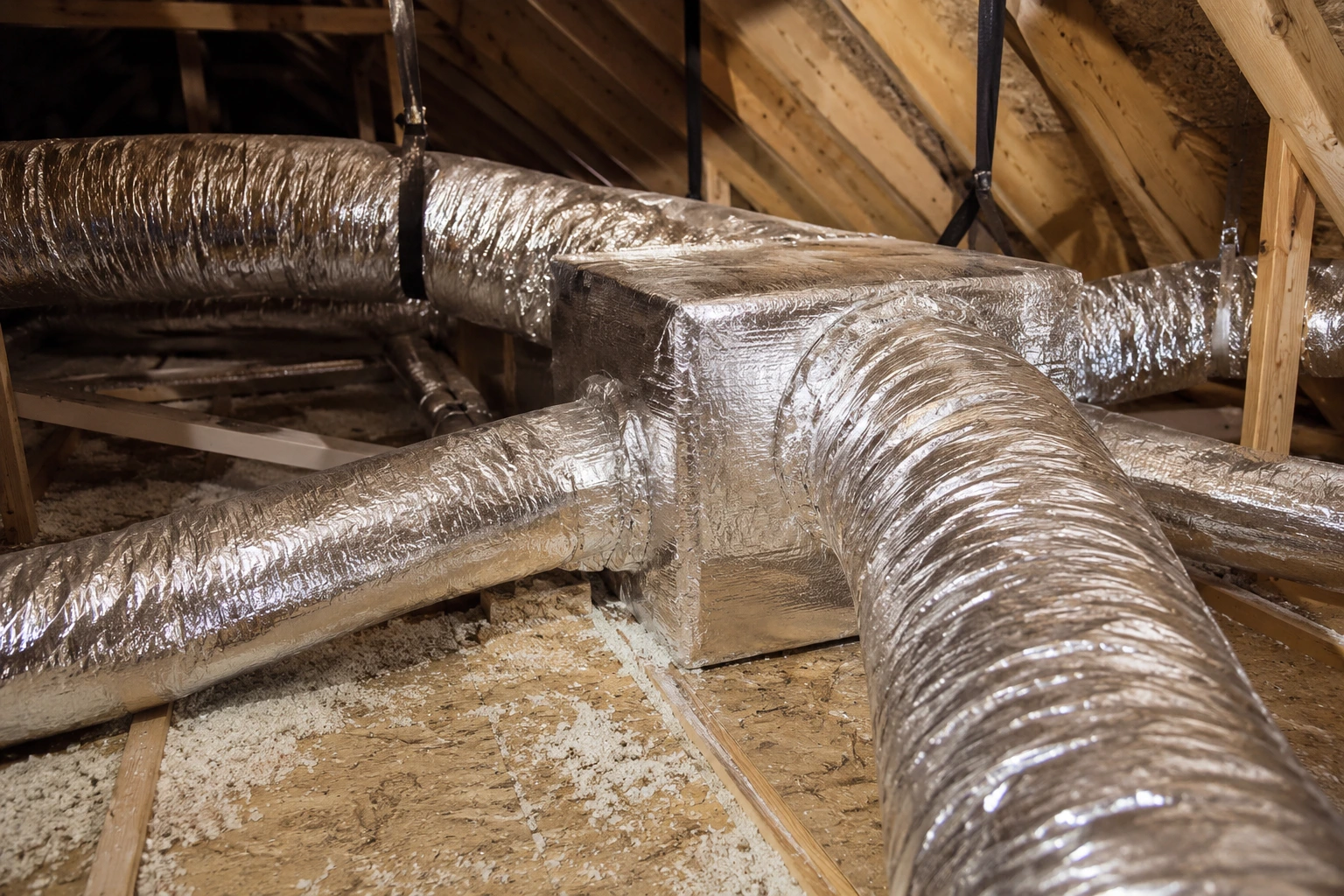
Sealing comes first because insulation cannot fix an air leak. Once the ducts are tight, air duct insulation helps prevent heat transfer through the duct walls.
In winter, insulation helps warm supply air stay warmer as it moves through cold areas. In summer, it helps cooled air stay cooler while traveling through hot attics or garages. Without insulation, the HVAC system may be delivering air that has already lost some of its heating or cooling value before it reaches the register.
The U.S. Department of Energy notes that insulating, air sealing, and locating ducts inside the conditioned space can reduce energy losses. It also explains that well-designed ducts should distribute air properly without leaking and should maintain balanced supply and return airflow.
That balance is where ductwork connects directly with broader HVAC performance. A sealed duct system supports Why Air Balancing Matters, because airflow problems often become easier to diagnose once leakage is no longer distorting the system.
Signs your home may have leaky ductwork
Duct issues are not always visible, but the symptoms are usually familiar. A home may need ductwork maintenance when:
- Some rooms are consistently hotter or colder than others.
- Energy bills rise without a clear change in usage.
- The HVAC system runs for long cycles but comfort does not improve.
- Supply registers have weak airflow.
- Dust collects quickly after cleaning.
- There are musty smells from crawl spaces, attics, or wall cavities.
- Ducts pass through very hot, cold, or humid areas without insulation.
These symptoms can overlap with other HVAC issues, including poor refrigerant charge, dirty coils, blocked filters, or incorrect blower settings. That is why duct inspection works best as part of a whole-system approach, especially during HVAC maintenance or HVAC Commissioning.
Sealing vs. insulating: what should come first?
The right order is simple: seal first, insulate second. Insulating a leaking duct is like putting a sweater over a cracked pipe. The surface may be covered, but the main problem remains. Sealing stops air from escaping. Insulation protects the temperature of the air that remains inside the duct.
| Upgrade | Main Purpose | Best Used For | Homeowner Mistake to Avoid |
|---|---|---|---|
| Duct sealing | Stops air leakage | Joints, seams, boots, plenums, takeoffs | Using regular cloth duct tape |
| Duct insulation | Reduces heat gain or loss | Attics, garages, crawl spaces, basements | Wrapping ducts before sealing leaks |
| Air balancing | Corrects uneven airflow | Rooms with comfort differences | Adjusting registers randomly |
| Duct repair | Restores damaged duct runs | Crushed, torn, rusted, or disconnected ducts | Ignoring restricted airflow |
| System commissioning | Verifies total performance | New installs or major upgrades | Assuming new equipment is automatically efficient |
This sequence matters because every step builds on the previous one. A sealed and insulated duct system gives the HVAC equipment a fair chance to perform as designed.
Where duct leakage usually happens
The worst leaks are often not in the long, straight duct runs. They appear at transitions, corners, and connection points.
Common trouble spots include:
- Supply and return plenums near the air handler.
- Takeoffs where branch ducts leave the main trunk.
- Flex duct connections.
- Duct boots behind registers.
- Return cavities using building framing instead of sealed duct material.
- Sections passing through attics, crawl spaces, and garages.
Return-side leaks can be especially troublesome. A supply leak wastes conditioned air. A return leak can pull dusty, humid, hot, cold, or polluted air into the system from unconditioned areas. That affects comfort, filtration, indoor air quality, and equipment workload.

DIY duct sealing: what homeowners can safely handle
Homeowners can often improve accessible ductwork without opening walls or ceilings. The safest starting point is visual inspection.
Turn the HVAC system on, then check visible ducts in the attic, basement, crawl space, or garage. Feel for escaping air near joints. Look for old tape peeling away, disconnected runs, crushed flex duct, gaps around boots, or damaged insulation.
For small accessible leaks, use water-based mastic or UL-rated foil tape designed for HVAC use. Mastic is especially useful because it fills uneven gaps and hardens into a durable seal. The U.S. Department of Energy’s Building America guidance describes applying UL-181 duct-sealant mastic over repaired duct connections, with enough thickness to create a lasting seal.
Regular duct tape should stay in the junk drawer for this job. It may look right at first, but heat, dust, pressure, and time usually cause it to dry out and fail.
When professional duct sealing is worth it
A professional inspection is the better route when ducts are hidden, leakage is severe, comfort problems are widespread, or the home has high heating and cooling costs despite normal thermostat settings.
Professional help is also smart when:
- The duct system is old or poorly designed.
- Return air paths are undersized.
- Rooms have major airflow differences.
- The HVAC system was recently replaced but comfort did not improve.
- There are signs of condensation, mold, or damaged insulation.
- Ducts are located in difficult or unsafe spaces.
A contractor can test total duct leakage, seal larger failures, repair damaged sections, verify static pressure, and check whether the duct system matches the equipment. This is also the right time to review Selecting the Right Refrigerant if cooling performance concerns are part of a larger equipment discussion.
How duct sealing supports an energy-efficient home
Home energy savings rarely come from one magic upgrade. They come from reducing waste across the building: air sealing, insulation, efficient equipment, smart controls, and proper maintenance.
Duct sealing and insulation fit into that bigger picture because they improve the connection between the HVAC equipment and the living space. ENERGY STAR reports that air sealing and adding insulation can help improve comfort and energy efficiency, with potential savings on annual energy bills. EPA estimates that homeowners can save an average of 15% on heating and cooling costs by air sealing homes and adding insulation in key areas such as attics, floors over crawl spaces, and basements.
For many homeowners, the biggest benefit is not just a lower bill. It is a house that feels calmer: fewer temperature swings, less system noise, better room-to-room consistency, and less frustration with the thermostat.
A practical maintenance plan for better duct performance
Ductwork does not need constant attention, but it should not be ignored for decades. A practical schedule keeps problems from turning into expensive repairs.
Check visible ductwork once a year, preferably before peak heating or cooling season. Replace dirty filters on schedule so airflow is not restricted. Keep supply and return registers open and unblocked. During HVAC service visits, ask the technician to inspect duct connections near the air handler and look for signs of leakage, condensation, or poor insulation.
After any major renovation, attic work, pest problem, or HVAC replacement, inspect the ducts again. Ducts are easy to bump, crush, disconnect, or leave unsealed when other work is happening around them.
The quiet upgrade that changes how a home feels
Duct sealing and insulation rarely get the attention given to new air conditioners, smart thermostats, or high-efficiency furnaces. Yet they often determine whether those upgrades can deliver their full value. A tight, insulated duct system keeps paid-for comfort inside the home, reduces waste in attics and crawl spaces, and helps the HVAC system run with less strain.
The hidden parts of a house often decide how comfortable the visible rooms feel. Well-sealed, well-insulated ducts turn that hidden network into an asset instead of a source of energy loss.