

Articles
AI HVAC Maintenance and Remote Monitoring

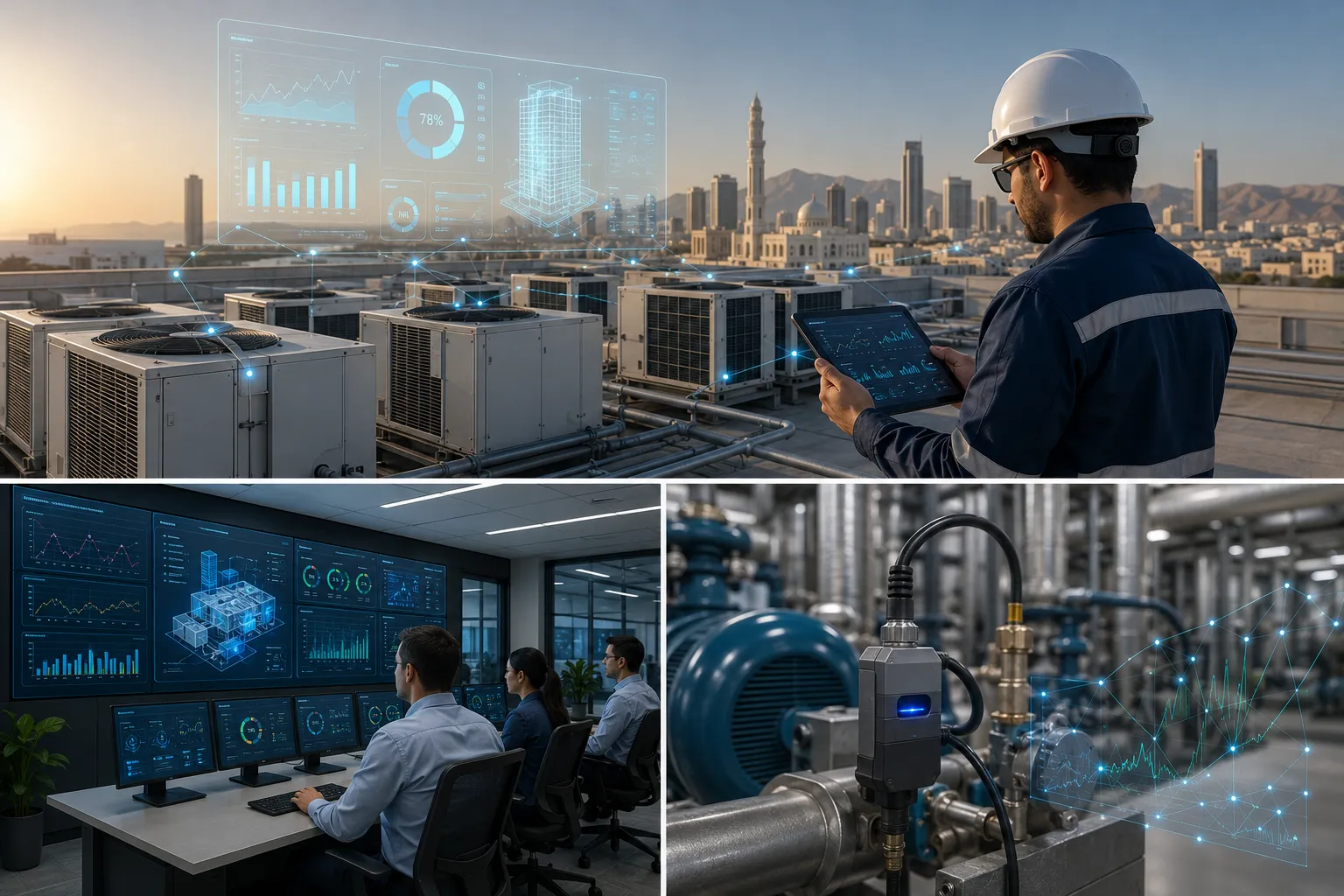
AI HVAC maintenance is no longer a futuristic upgrade for large buildings; it is becoming a practical way to prevent breakdowns, control energy waste, and keep occupants comfortable in demanding operating conditions. Instead of waiting for a compressor to fail, a chilled-water valve to stick, or a rooftop unit to consume more power than usual, AI-based systems read live equipment data, detect abnormal patterns, and alert facility teams before small faults turn into expensive downtime.
| Article at a Glance | Key Takeaway |
|---|---|
| Main focus | How AI and remote monitoring improve HVAC maintenance |
| Best suited for | Commercial buildings, malls, hotels, hospitals, offices, and industrial facilities |
| Core technologies | Sensors, IoT gateways, cloud analytics, predictive maintenance software, fault detection |
| Main benefits | Lower downtime, better HVAC energy efficiency, improved comfort, longer asset life |
| High-value use case | Equipment failure prediction in hot climates such as Muscat |
| Strategic value | Supports facility management automation and smarter capital planning |
Why Predictive HVAC Maintenance Matters Now
HVAC systems sit at the center of building performance. They affect comfort, productivity, energy bills, indoor air quality, and asset reliability. In regions with long cooling seasons and high outdoor temperatures, the pressure on HVAC equipment is even greater. A system that performs acceptably in mild weather may struggle under extreme heat, dusty air, humidity, and high daily runtime.
The energy impact is significant. The International Energy Agency reports that building operations account for around 30% of global final energy consumption and 26% of global energy-related emissions. That makes HVAC system performance a financial issue as much as a technical one.
For facility managers, the old maintenance model creates a difficult trade-off. Reactive maintenance waits until something fails. Preventive maintenance services equipment on a calendar, even when some components do not need attention yet. Predictive maintenance software offers a more intelligent middle ground: it uses real operating data to decide when action is actually needed.
As Lawrence Berkeley National Laboratory explains, fault detection and diagnostics technology can identify equipment-level faults from building operational data and has shown average savings of about 9% with two-year paybacks.
What AI HVAC Maintenance Actually Means
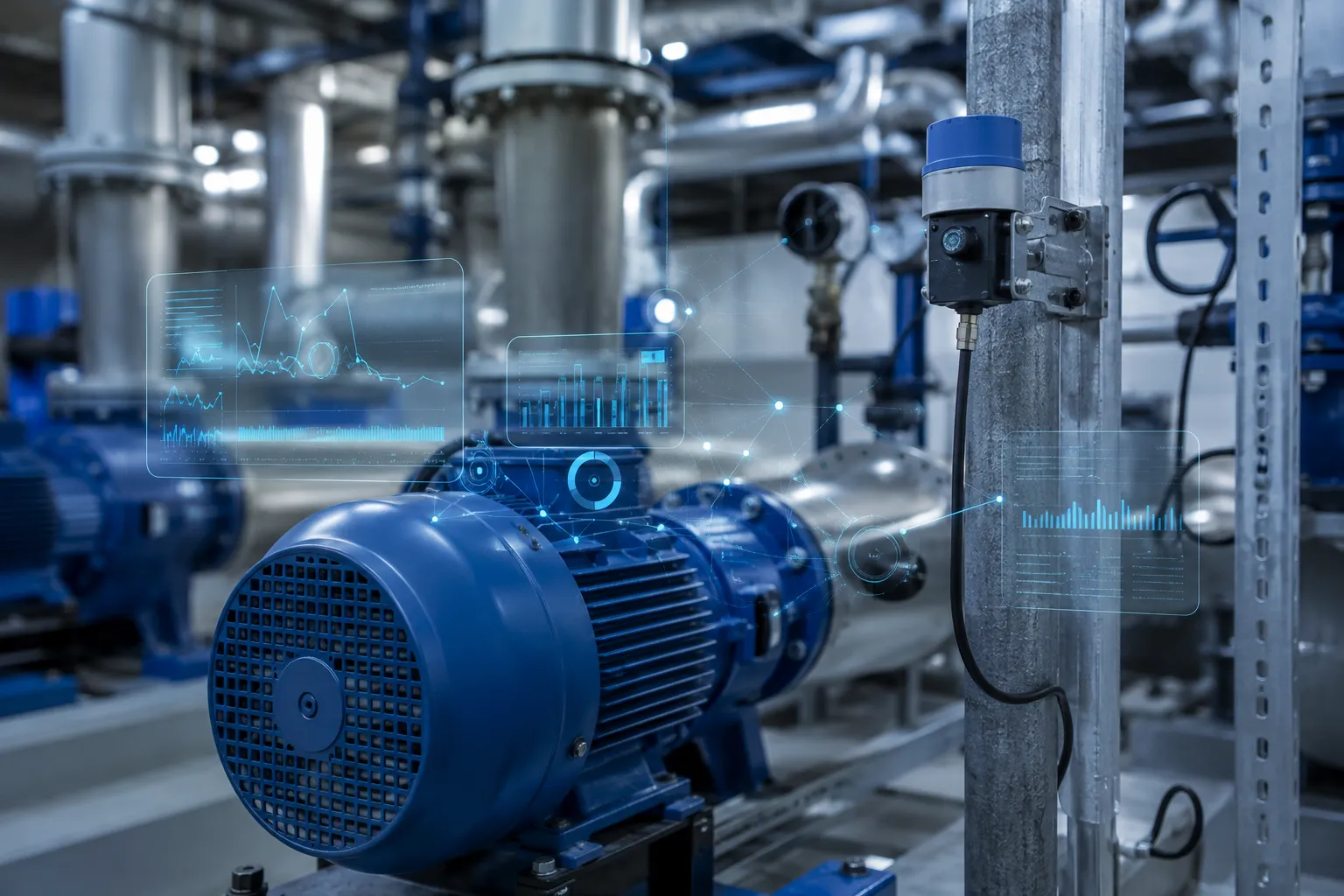
AI HVAC maintenance combines sensors, remote equipment monitoring, automated fault detection, and machine learning models to evaluate the condition of HVAC assets continuously. The system does not simply show whether a unit is on or off. It studies relationships between temperature, pressure, vibration, airflow, humidity, energy use, run hours, valve positions, compressor cycles, and control signals.
A basic HVAC monitoring system may show alarms. An AI-powered platform goes further by identifying patterns that suggest a future fault. For example, it may detect that a fan motor is drawing slightly more current than normal while airflow is slowly declining. On its own, that change may not trigger a conventional alarm. In an AI model, it may indicate belt wear, bearing stress, filter restriction, or a developing motor issue.
This is where equipment failure prediction becomes valuable. The facility team receives early insight, schedules inspection at the right time, and avoids emergency disruption.
Remote Monitoring Turns HVAC Data Into Action
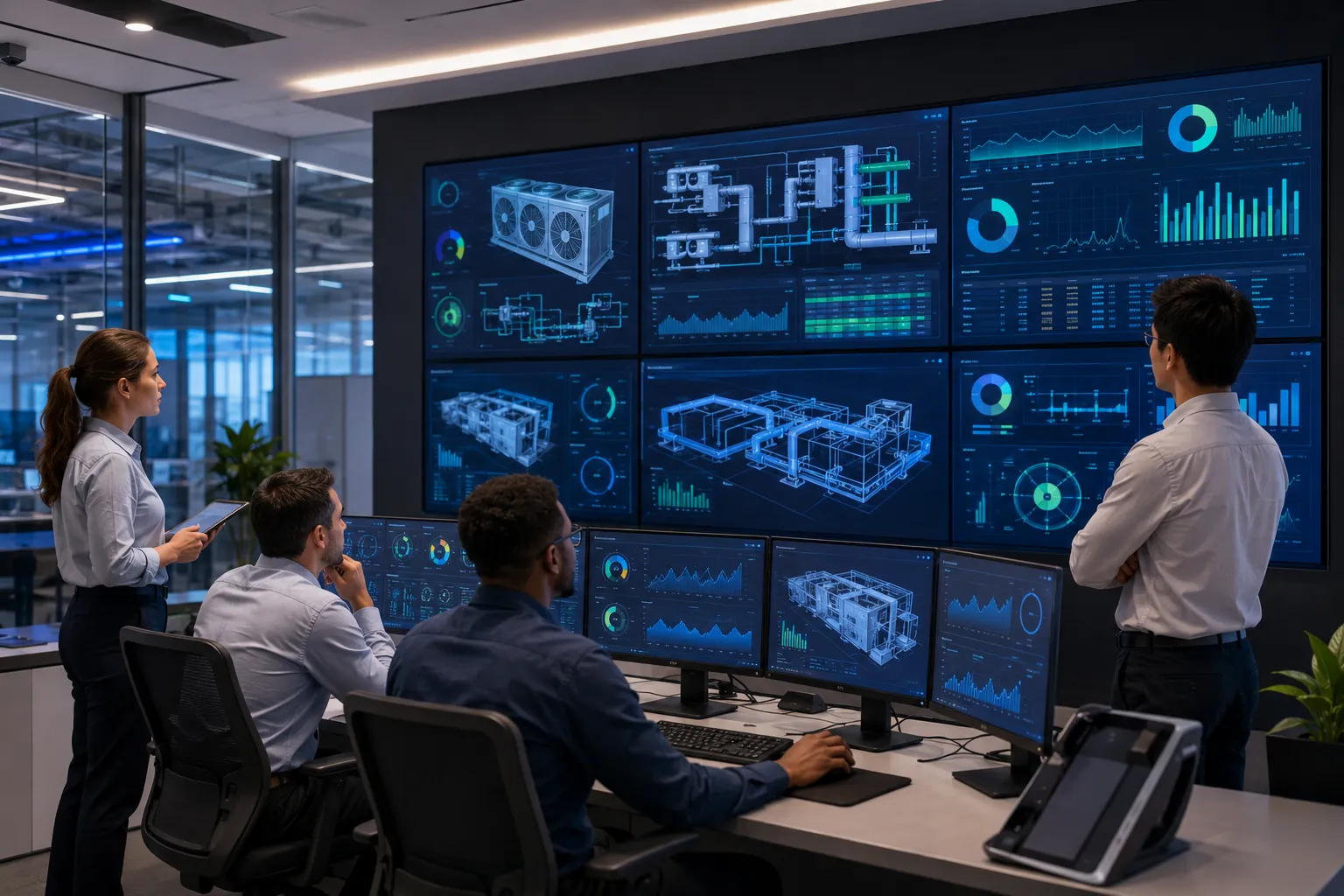
Remote equipment monitoring allows facility teams and service providers to view system health from a central dashboard. This is especially useful for organizations managing multiple sites, distributed buildings, or critical assets that cannot afford unplanned downtime.
A strong monitoring setup usually includes:
- Sensors installed on key equipment and control points
- IoT gateways that collect and transmit operational data
- Cloud-based dashboards for live visibility
- Predictive maintenance software that analyzes trends
- Automated alerts ranked by urgency and business impact
- Work-order integration for facility management automation
The goal is not to flood engineers with more data. The goal is to turn scattered data into prioritized decisions. A useful platform should tell the team what is happening, why it matters, what may happen next, and which action should be taken first.
The Difference Between Traditional and AI-Driven Maintenance
| Maintenance Approach | How It Works | Main Limitation | Best Use |
|---|---|---|---|
| Reactive maintenance | Repairs happen after failure | High downtime and emergency cost | Low-risk, non-critical assets |
| Preventive maintenance | Service occurs on fixed schedules | Can over-maintain or miss hidden faults | Standard equipment care |
| Condition-based maintenance | Action is based on measured condition | Depends on good sensor coverage | Larger mechanical systems |
| AI-driven predictive maintenance | Algorithms forecast risk from live and historical data | Requires reliable data and clear processes | Critical HVAC systems and multi-site portfolios |
Predictive maintenance does not replace skilled technicians. It makes their work sharper. Instead of spending time searching for hidden issues, technicians arrive with a clearer diagnosis, trend history, and likely root cause.
How AI Detects HVAC Faults Before Failure
AI models learn from normal operating behavior. Once they understand what “healthy” looks like for a specific asset, they can recognize deviations. This matters because HVAC faults often develop gradually. A valve may leak slightly. A coil may foul over several months. Refrigerant charge may drift. A damper may fail to open fully. These issues waste energy long before they cause a breakdown.
The U.S. Department of Energy notes that HVAC system and control faults are estimated to account for an average of 29% of commercial building energy use, making automated fault detection and diagnostics an important opportunity for reducing waste. Common faults detected by AI HVAC maintenance platforms include:
- Abnormal compressor cycling
- Refrigerant undercharge or overcharge indicators
- Dirty coils and restricted airflow
- Sensor drift or failed sensors
- Simultaneous heating and cooling
- Stuck dampers or valves
- Fan motor degradation
- Chiller performance decline
- Excessive energy use during low-load periods
- Control sequence errors
These problems are often invisible in day-to-day building operations. Occupants may still feel comfortable, but the system may be working harder than necessary. Over time, that hidden inefficiency becomes higher utility cost, shorter equipment life, and increased failure risk.
HVAC Energy Efficiency Starts With Better Visibility
Energy efficiency is not achieved only by installing new equipment. It is also achieved by operating existing equipment intelligently. Smart building technology makes this possible by connecting HVAC assets with building management systems, analytics platforms, occupancy data, and utility information.
The IEA has reported that :
demand for space cooling has risen by about 4% per year since 2000, twice as fast as water heating, and that cooling demand strongly affects peak electricity use during hot days.
This trend is especially relevant for hot-climate markets. In Oman and across the GCC, cooling is not a seasonal luxury; it is a core building requirement. That makes HVAC energy efficiency a direct operating priority for commercial properties, hospitality assets, healthcare buildings, schools, retail centers, and industrial facilities.
AI HVAC Maintenance in Muscat’s Extreme Climate
Muscat creates a demanding environment for HVAC systems. Long cooling hours, high outdoor temperatures, dust exposure, humidity, and heavy compressor workload all increase mechanical stress. In this context, HVAC maintenance cost in Muscat is influenced not only by labor and spare parts, but also by energy waste, emergency callouts, occupant complaints, and premature equipment replacement.
Predictive analytics help facility teams move from routine inspection to risk-based action. A hotel, for example, can identify declining fan coil performance before guest comfort suffers. A hospital can monitor air-handling units more closely to protect critical indoor conditions. A commercial tower can compare HVAC system performance across floors and detect energy waste linked to control faults.
This is also where local expertise matters. Working with a provider such as Filabico can help building owners align AI-enabled monitoring, HVAC maintenance, and HVAC Retrofit decisions with the actual demands of Muscat’s operating environment.
Where HVAC Retrofit Fits Into Predictive Maintenance
Predictive maintenance is not only about fixing equipment. It also reveals when an HVAC Retrofit makes better financial sense than repeated repair.
A building may have aging chillers, inefficient constant-speed pumps, outdated controls, or air-handling units that no longer match occupancy patterns. AI analytics can expose these issues through performance trends. If a unit consistently consumes more energy than similar assets under comparable conditions, the data may support retrofit planning. Retrofit opportunities often include:
- Variable frequency drives for pumps and fans
- Advanced building automation controls
- Smart thermostats and occupancy-based control
- High-efficiency chillers or VRF systems
- Better sensors and metering
- Improved filtration and coil maintenance programs
- Integration of HVAC monitoring system dashboards
The advantage is that investment decisions are supported by evidence, not guesswork. Facility managers can rank upgrades by energy impact, operational risk, and payback potential.
Remote Monitoring and Facility Management Automation
Facility management automation becomes more powerful when HVAC insights are connected to workflows. An alert should not live only inside a dashboard. It should trigger the right operational response.
For example, when predictive maintenance software identifies abnormal vibration in an air-handling unit, the system can generate a work order, assign it to the correct technician, attach equipment history, and recommend inspection steps. Once the task is complete, the platform can track whether performance returned to normal.
This creates a feedback loop between AI insight and human action. Over time, the building becomes easier to manage because every fault, repair, and performance improvement strengthens the operational record.
Measuring the Business Case
The business case for AI HVAC maintenance usually comes from several areas at once. Energy savings are important, but they are not the only value.
| Value Area | Business Impact | Example Metric |
|---|---|---|
| Reduced downtime | Fewer emergency failures | Hours of avoided disruption |
| Lower energy use | Improved HVAC energy efficiency | kWh reduction per month |
| Longer asset life | Less stress on equipment | Extended replacement cycle |
| Better comfort | Fewer complaints | Occupant complaint rate |
| Smarter labor use | Less time spent diagnosing faults | Technician hours saved |
| Better planning | More accurate capital budgeting | Forecasted replacement timing |
A strong implementation should define baseline performance before installation. Without a baseline, it becomes difficult to prove improvement. The most useful metrics include energy use intensity, runtime, fault frequency, emergency repair cost, comfort complaints, and maintenance response time.
Emerging HVAC Trends Shaping the Next Phase
Emerging HVAC Trends are moving the industry toward more connected, data-driven, and automated operations. AI is only one part of that shift. The broader movement includes digital twins, advanced controls, grid-interactive buildings, electrification, carbon reporting, and deeper integration between HVAC systems and enterprise facility platforms.
One important trend is the rise of automated fault detection and diagnostics as a standard feature rather than a premium add-on. Another is the use of edge computing, where some analytics happen directly at the equipment level instead of relying only on cloud processing. This can improve response speed and reduce dependence on continuous connectivity.
Extreme Climate HVAC strategies are also becoming more important. Buildings in hot regions need systems designed not only for peak load, but for resilience, maintainability, and long-term energy control. AI supports this by showing how systems behave during real heat events, not only under design assumptions.
Implementation: What Facility Teams Should Get Right
AI-powered HVAC maintenance works best when the technical setup and operational process are aligned. Installing sensors and software is not enough. The organization must decide who receives alerts, who validates them, how work orders are created, and how results are measured.
A practical rollout often starts with critical assets: chillers, air-handling units, rooftop units, pumps, cooling towers, and systems serving high-value spaces. After early performance gains are proven, the program can expand across the portfolio.
The most important implementation factors are:
- Clean and consistent equipment data
- Correct sensor placement and calibration
- Integration with existing BMS or CMMS platforms
- Clear alarm prioritization
- Technician training
- Monthly performance review
- Continuous tuning of AI models
Poor data quality can weaken even the best analytics platform. For that reason, commissioning and data validation should be treated as core parts of the project.
Common Mistakes to Avoid
Many organizations invest in smart building technology but fail to capture its full value because the system is not connected to daily operations. A dashboard that no one checks will not reduce downtime. Alerts that are too frequent will be ignored. Reports that do not translate into action will become background noise.
The most common mistakes include connecting too many low-priority alarms, ignoring technician feedback, skipping baseline measurement, and treating AI as a replacement for engineering judgment. The better approach is to use AI as a decision-support layer. It should make facility teams faster, more accurate, and more proactive.