

Articles
Designing HVAC Systems for Pharmaceutical and Cleanrooms

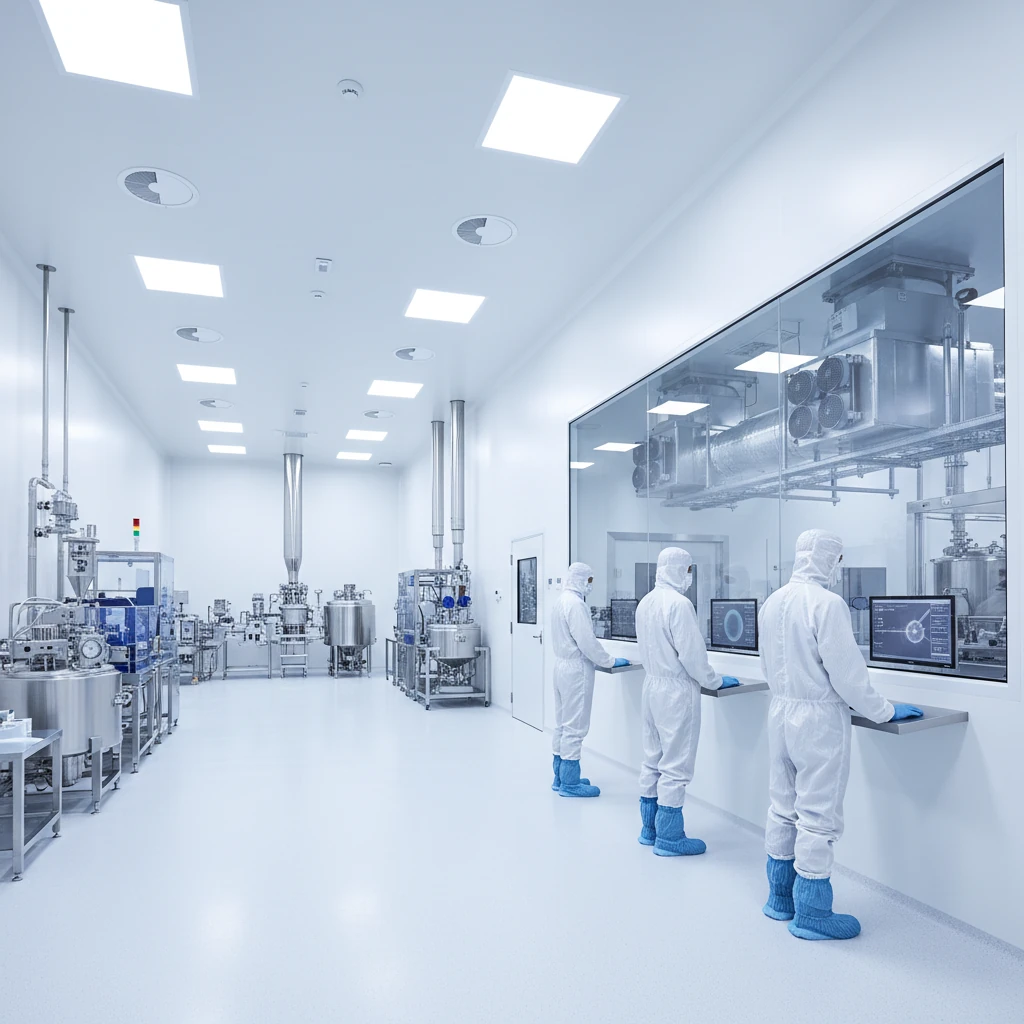
Designing HVAC Systems for Pharmaceutical applications is one of the most demanding engineering tasks in regions like Muscat, where temperatures often exceed 45°C and humidity becomes a major operational obstacle. In such environments, ensuring effective contamination control, constant temperature regulation, and energy efficiency requires more than standard HVAC design—it demands a strategic blend of technology, compliance, and climate adaptation.
Muscat’s pharmaceutical and healthcare sectors are growing rapidly, and facilities must meet global standards such as WHO TRS 1019, ISO 14644, and GMP (Good Manufacturing Practice). The key is not merely to cool or ventilate spaces but to create an environment where air purity and pressure gradients maintain sterile integrity even under desert conditions.
Core Design Principles for Pharmaceutical HVAC Systems
1. Contamination Control
In pharmaceutical HVAC systems, airborne particles and microbial contaminants represent the greatest threat. Every cubic meter of air must adhere to ISO standards (e.g., ISO Class 7 for general sterile zones or ISO Class 5 for aseptic areas). As highlighted by CSI Testing:
“Cleanroom classifications are defined by the maximum number of airborne particles and microbial contamination allowed, ranging from ISO 1 to 9.”
This means that the filtration system, air supply layout, and ductwork integrity all must be engineered to maintain particle limits under peak operational loads.
2. Pressure Management
Pharmaceutical plants depend on positive pressure rooms to prevent contaminants entering sterile zones and negative pressure in areas handling hazardous substances.
Maintaining these gradients in Muscat’s fluctuating barometric conditions is challenging. Sophisticated differential pressure sensors and zonal control valves should be integrated to sustain balance even during power fluctuations or high humidity events.
3. Humidity and Temperature Control
Relative humidity exceeding 60% can promote microbial growth and chemical instability. HVAC systems in pharma environments often target RH between 30%–50%, with precise temperature control (20–22°C). In Muscat, dehumidification capacity must be expanded by up to 40% compared to temperate regions, utilizing desiccant systems alongside cooling coils.
4. Filtration and Air Quality
Modern pharmaceutical HVAC systems require HEPA or ULPA filters, capable of removing particles as small as 0.3 microns. Two-stage filtration—pre-filtering and final HEPA purification—ensures that both sterile production areas and personnel entry zones remain controlled. According to PharmacistPK:
“The ductwork in pharmaceutical facilities is a critical component for contamination control and pressure balancing, conforming to GMP and ISO 14644 guidelines.”
Customized Solutions for Muscat’s Extreme Climate
Extreme Climate HVAC Considerations
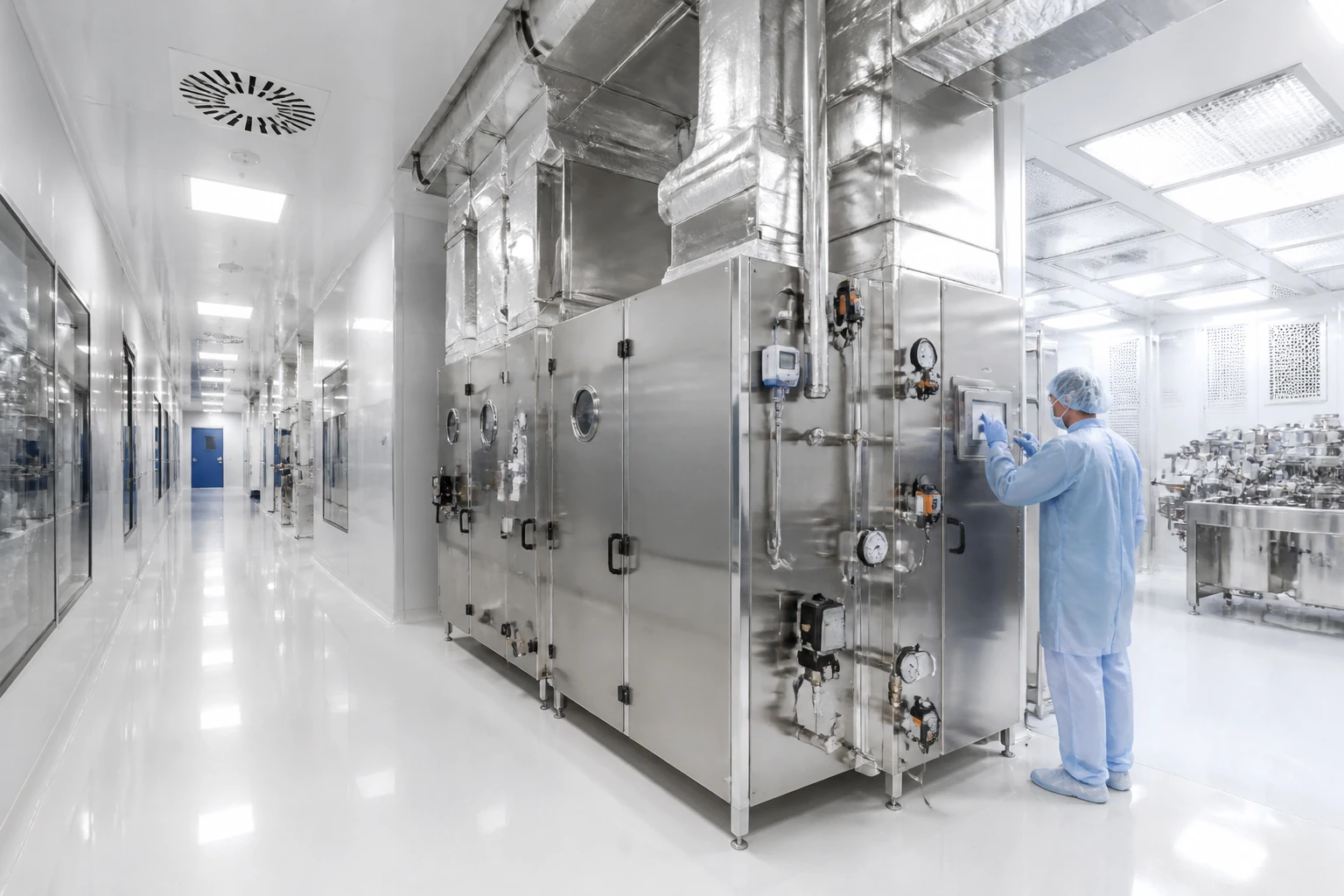
Muscat’s intense heat and saline coastal air pose unique mechanical and corrosion challenges for HVAC components. Systems must employ anti-corrosive duct linings, marine-grade coils, and UV-resistant insulation. Chillers should be equipped with adaptive compressors capable of modulating load dynamically.
|
Design Element |
Climate Adaptation Feature |
| Ductwork |
Galvanized or powder-coated steel to resist salt corrosion |
|
Coils |
Epoxy-coated fins for humidity resilience |
| Filters |
Protected housings to avoid moisture saturation |
|
Sensors |
IoT-based humidity and pressure sensors |
| Software |
Predictive maintenance and remote calibration modules |
These adaptations not only preserve performance but extend system lifespan under harsh conditions.
Integrating Smart HVAC IoT and System Intelligence
The integration of Smart HVAC IoT systems has revolutionized contamination management and energy efficiency. Real-time monitoring of humidity, particle counts, and differential pressures allows engineers to react instantly to deviations.
This digital integration complements Building Management Systems (BMS) and can automatically adjust airflows or notify technicians before contamination risks arise.
For pharmaceutical facilities in Muscat, smart systems also help manage unpredictable power supply scenarios by rebalancing airflow once emergency generators take over.
Role of Retrofit Projects and Sustainable Upgrades
HVAC retrofit is emerging as a cost-effective solution for existing pharmaceutical plants that must comply with evolving GMP or ISO standards. Retrofitting allows integration of new filter modules, upgraded control panels, and energy-efficient variable frequency drives (VFDs) without replacing the entire system.
Companies like Filabico in Muscat have specialized in supporting retrofit and maintenance services for cleanroom-grade HVAC systems, emphasizing compliance and long-term sustainability. Their collaboration with local healthcare and pharma facilities highlights the potential for optimized system performance even in demanding climate zones.
Design for Special Equipment: Autoclave Sterilizer HVAC
Autoclaves generate substantial heat and moisture during sterilization cycles. HVAC systems around autoclave rooms must provide:
- High airflow extraction to control humidity peaks.
- Stainless steel ductwork resistant to steam exposure.
- Reinforced pressure zones to handle exhaust surges.
- Dedicated dehumidification modules linked to BMS.
These elements ensure equipment longevity and product sterility even during high-load sterilization phases.
Maintenance and Monitoring Best Practices
Regular maintenance under Muscat’s climate is essential for reliable performance:
- HEPA filter testing every 6 months.
- Humidity and temperature calibration quarterly.
- Pressure audit after major system updates.
- Use of remote monitoring assisted by Smart HVAC IoT modules for predictive alerts.
Routine air velocity and leakage testing by certified bodies confirms duct integrity and system compliance with WHO TRS 1019 Annex 2 standards.
Design Collaboration and Engineering Workflow
A typical pharmaceutical HVAC system design project in Muscat includes:
- Site Analysis and Classification – Determining required ISO class zones.
- Load Calculation and Zoning – Adjusting for temperature extremes and solar gain.
- System Selection – Custom AHUs or Chilled Water Systems.
- Ductwork Design – Per ASHRAE and GMP specifications.
- Control Integration – IoT-enabled BMS architecture.
- Validation and Commissioning – Ensuring pressure and particle compliance.
This multi-stage workflow guarantees that air purity and controlled conditions remain stable even under dynamic local weather.
Energy Efficiency and Sustainability
Energy consumption is a significant concern for pharmaceutical manufacturing in hot climates.
Modern HVAC systems utilizing variable-speed fans, heat recovery, and optimized airflow zoning can reduce energy use by up to 30%. Moreover, integrating renewable cooling sources such as evaporative pre-cooling or solar-assisted chillers can complement Muscat’s sustainability vision.
How Standards Shape Reliability and Compliance
The most critical references in pharmaceutical HVAC design include:
- WHO TRS 1019 Annex 2 — guidelines for HVAC in sterile and non-sterile facilities.
- ISO 14644 — classification of cleanrooms by particle count.
- ASHRAE 170 — ventilation of healthcare facilities.
- GMP guidelines — overarching quality and cleanliness standards.
These standards collectively ensure that HVAC implementation supports therapeutic integrity, safety, and operational reliability from production through distribution.
Engineering Resilience for the Future
As Muscat continues to diversify its pharmaceutical and healthcare industries, HVAC design must evolve toward adaptive, intelligent, and climate-conscious systems. The combination of Smart HVAC IoT, autoclave-specific air handling, and Filabico’s expertise in retrofit solutions exemplifies the region’s ability to achieve world-class contamination control without compromising durability in an extreme environment.
Ultimately, a well‑designed HVAC system is not just about airflow—it is about preserving health, precision, and sustainability across every square meter of controlled space.