

Articles
Chiller Maintenance Checklist in Dubai (Monthly / Quarterly)

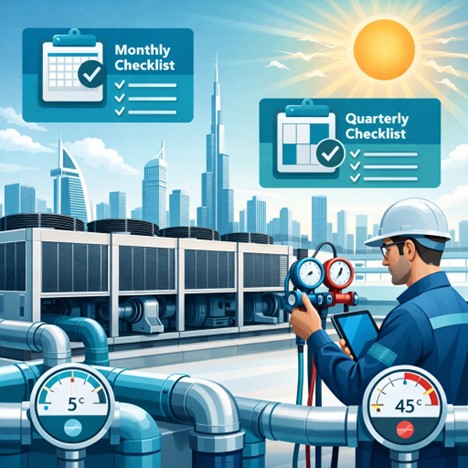
When a cooling system suddenly fails in the middle of Dubai’s intense summer heat, the consequences can be immediate—uncomfortable buildings, disrupted business operations, and costly emergency repairs. That’s exactly why having a reliable chiller maintenance checklist in Dubai is not optional; it’s essential. If you manage a commercial building, hotel, data center, or industrial facility, proactive maintenance protects your cooling infrastructure from unexpected breakdowns while keeping energy costs under control. In this guide, you’ll discover a practical monthly and quarterly maintenance framework used by experienced HVAC professionals in hot climates, so you can keep your chiller system efficient, stable, and long‑lasting.
Dubai’s cooling demands are unique. High ambient temperatures, airborne dust, and year‑round cooling requirements place extreme stress on chiller systems. Unlike milder climates where chillers may operate seasonally, systems in the Gulf region often run continuously. That means maintenance must be structured, preventive, and carefully documented.
This guide explains not only what tasks should be performed, but also why each task matters. By the end, you’ll have a complete operational understanding of the chiller maintenance checklist in Dubai, helping you prevent downtime and maintain peak cooling performance.
Why Chiller Maintenance Is Critical in Dubai
Dubai operates within what engineers often refer to as an extreme climate HVAC environment. Summer temperatures regularly exceed 45°C, and even during cooler months the demand for air conditioning remains high.
These environmental conditions create several challenges for HVAC systems:
- Continuous system operation increases wear on compressors, pumps, and fans.
- Dust accumulation reduces heat transfer efficiency in condensers and coils.
- High humidity and heat place extra load on cooling towers and refrigerant cycles.
Without routine inspection, small inefficiencies can rapidly escalate into major failures. A clogged condenser coil or slightly low refrigerant level may appear insignificant at first, but under high thermal load, those minor issues can trigger compressor damage or system shutdowns.That’s why facility managers rely on structured maintenance routines rather than reactive repairs. According to U.S. Department of Energy:
Preventive maintenance keeps HVAC systems operating at peak efficiency and can significantly reduce energy consumption and unexpected equipment failures.
Understanding the Role of a Chiller System
Before diving into the checklist itself, it’s helpful to understand the basic components involved in chiller operation.
A typical chiller system includes:
- Compressor
- Evaporator
- Condenser
- Expansion valve
- Pumps and piping network
- Cooling tower (for water‑cooled systems)
These components work together to remove heat from building water loops, distributing chilled water to air handling units and fan coil units throughout the facility.
If even one component loses efficiency, the entire cooling chain becomes compromised. Regular inspection ensures that heat transfer remains effective and mechanical components remain within safe operating parameters.
Monthly Chiller Maintenance Checklist
Monthly maintenance focuses on operational stability. These tasks are relatively quick but extremely important because they identify problems before they escalate.
A structured monthly chiller maintenance checklist in Dubai usually includes the following inspections.
- Check refrigerant pressure and temperature levels
- Inspect compressor oil level and condition
- Examine electrical connections and tighten terminals
- Inspect condenser coils for dirt or debris buildup
- Verify chilled water supply and return temperatures
- Inspect pumps for abnormal noise or vibration
- Check system control panels and alarm logs
These checks provide early warning signs of inefficiency or mechanical wear. For example, a gradual change in chilled water temperature difference can indicate fouling inside the heat exchanger or reduced refrigerant performance.
Another critical part of monthly inspections is verifying airflow and water flow rates. Reduced flow directly impacts heat transfer efficiency and increases system energy consumption.
Quarterly Chiller Maintenance Checklist
Quarterly maintenance goes deeper into system performance and involves more technical inspections. While monthly checks focus on observation, quarterly tasks include preventive servicing and performance testing. Typical quarterly activities include:
- Cleaning condenser and evaporator tubes
- Calibrating sensors and control systems
- Inspecting refrigerant leaks using detection equipment
- Lubricating moving mechanical components
- Inspecting insulation on chilled water pipes
- Checking cooling tower performance and water treatment
During quarterly inspections, HVAC engineers often conduct performance benchmarking. This involves comparing current operational data with design specifications to detect hidden inefficiencies.
For instance, if compressor power consumption rises while cooling capacity remains the same, it may signal refrigerant imbalance or internal mechanical wear.Routine benchmarking ensures the system continues operating near optimal efficiency levels.
Practical Maintenance Schedule for Facility Managers
The table below outlines a simplified maintenance planning framework that building operators can use to organize their chiller maintenance program.
|
Maintenance Task |
Frequency | Purpose | Impact on Efficiency |
|
Refrigerant pressure check |
Monthly |
Detect leaks or imbalance |
Prevent compressor damage |
|
Electrical system inspection |
Monthly | Ensure stable power supply |
Reduce unexpected shutdowns |
|
Condenser coil cleaning |
Quarterly | Improve heat rejection |
Lower energy consumption |
|
Sensor calibration |
Quarterly | Maintain accurate system control |
Improve cooling precision |
|
Cooling tower inspection |
Quarterly | Ensure water flow and heat exchange | Stabilize overall performance |
| Compressor oil analysis | Quarterly | Detect internal wear |
Extend equipment lifespan |
Implementing a structured maintenance calendar like this ensures that no critical inspection is overlooked.
Common Chiller Problems in Desert Climates
Operating in desert environments introduces unique stress factors that HVAC systems must handle.Dust accumulation is one of the most frequent causes of efficiency loss. Fine sand particles settle on condenser coils and cooling tower components, reducing airflow and heat transfer capability.
Another challenge is thermal overload. When outside temperatures climb dramatically, compressors must work harder to maintain chilled water temperatures. This constant load accelerates mechanical wear.Facility managers who follow a strict chiller maintenance checklist in Dubai significantly reduce the likelihood of these issues becoming severe failures.
Energy Efficiency and Sustainable Cooling
Energy consumption is one of the largest operational costs in large buildings across the Gulf region. Chiller systems alone can account for more than half of a building’s electricity usage. Because of this, many modern buildings are adopting principles of Green HVAC Design to reduce environmental impact while maintaining comfort. Key strategies include:
- Optimizing chiller sequencing in multi‑chiller plants
- Using variable speed drives for pumps and fans
- Implementing advanced building management systems
- Improving heat exchanger cleanliness and efficiency
Maintenance plays a direct role in sustainability. Even a small efficiency loss in a chiller can increase energy consumption significantly over time. Regular inspections and proper cleaning help ensure the system operates at peak performance.
When to Call Professional HVAC Experts
While facility staff can perform basic inspections, many maintenance procedures require specialized knowledge and equipment.Professional HVAC engineers can perform advanced diagnostics such as:
- Oil analysis and compressor health evaluation
- Refrigerant leak detection and recovery
- Performance testing under load conditions
- Control system optimization
In the Gulf region, large commercial facilities often collaborate with international HVAC specialists. For example, companies like filabico, operating in Muscat, Oman, provide engineering solutions and HVAC system support across demanding climate environments in the Middle East.
Working with experienced professionals ensures maintenance procedures follow industry standards and manufacturer recommendations.
How Maintenance Prevents Costly System Failures
One of the biggest misconceptions in facility management is assuming that chillers only require service when problems appear. In reality, most catastrophic failures develop slowly over time.
For example, a minor refrigerant leak might initially reduce cooling efficiency by only a few percent. However, if left unresolved, the compressor may eventually overheat and fail completely—resulting in expensive replacement costs and downtime.
A structured chiller maintenance checklist in Dubai acts as an early detection system. By monitoring system parameters regularly, technicians can identify anomalies long before they become emergencies. This proactive approach dramatically reduces long‑term operational expenses.
Signs Your Chiller System Needs Immediate Inspection
Facility operators should remain alert for warning signs that indicate maintenance is urgently required. Some of the most common indicators include:
- Sudden increase in electricity consumption
- Fluctuating chilled water temperatures
- Unusual noise from compressors or pumps
- Frequent system alarms or automatic shutdowns
- Reduced cooling performance during peak hours
Ignoring these symptoms can accelerate equipment deterioration and lead to unexpected system failures.
The Future of Chiller Maintenance
Modern HVAC systems are becoming increasingly intelligent. Smart sensors, predictive maintenance software, and IoT‑enabled monitoring tools allow engineers to track system performance in real time. These technologies help maintenance teams predict equipment wear before failures occur.
Even with advanced monitoring tools, however, physical inspections remain essential. A well‑structured chiller maintenance checklist in Dubai continues to be the foundation of reliable cooling system management.
When digital monitoring is combined with disciplined preventive maintenance, facility managers can achieve maximum reliability and energy efficiency.
Conclusion
Chiller systems are the backbone of cooling infrastructure in Dubai’s demanding climate. Without proper maintenance, even the most advanced systems can quickly lose efficiency or fail entirely. A structured maintenance program—combining monthly inspections, quarterly servicing, and professional diagnostics—ensures that chillers operate reliably throughout the year.
By following a comprehensive chiller maintenance checklist in Dubai, building managers can reduce operational risks, control energy consumption, and extend the lifespan of critical cooling equipment.Preventive maintenance is not just a technical routine—it is a strategic investment in building performance, sustainability, and occupant comfort.