

Articles
VRF Systems GCC: Smart HVAC Benefits for Modern Projects

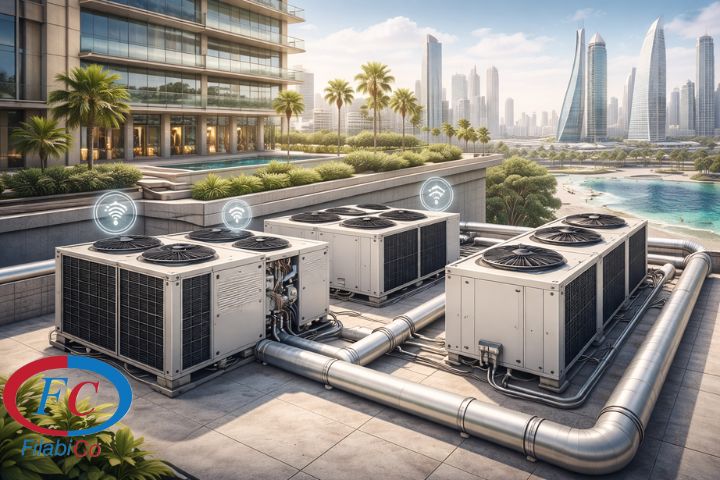
VRF systems GCC projects increasingly rely on are designed to deliver high efficiency, flexible zoning and precise comfort control in demanding climates. For developers and facility managers across the region, VRF technology offers a practical way to reduce energy use while maintaining consistent indoor conditions year-round.
Quick overview: why VRF matters in the GCC
| Aspect | VRF system advantage | Impact in GCC climate |
|---|---|---|
| Energy efficiency | Variable compressor speed, part-load optimization | Lower electricity consumption |
| Zoning flexibility | Individual indoor unit control | Comfort across mixed-use spaces |
| Space and aesthetics | Compact piping, fewer large ducts | Easier integration in modern buildings |
| Operational reliability | Advanced controls and diagnostics | Faster fault detection and recovery |
| Sustainability alignment | High seasonal efficiency | Supports Green HVAC Design goals |
What makes VRF systems suitable for the GCC
Unlike conventional systems that cycle on and off at full capacity, VRF technology continuously adjusts refrigerant flow to match real demand. This ability is particularly valuable in the GCC, where buildings often experience extreme outdoor temperatures but fluctuating internal loads throughout the day.
From offices and hotels to healthcare and residential towers, VRF systems allow multiple zones to cool or heat independently. This avoids the common problem of overcooling some areas just to satisfy others, a major source of wasted energy in large buildings.
Industry specialists focusing on the region highlight this advantage clearly. According to JC Arabia:
“VRF systems are especially effective in GCC climates due to their ability to operate efficiently under high ambient temperatures while offering precise control for different zones.”
How VRF technology works in practice
At the heart of VRF systems is an inverter-driven compressor that modulates output instead of running at a fixed speed. Refrigerant is delivered only where and when it is needed, based on signals from indoor units and sensors.
Before exploring applications, it helps to understand the operating concept. In simple terms, VRF systems provide:
- Continuous capacity control instead of start–stop operation
- Simultaneous cooling and heating options in advanced configurations
- Integrated controls that simplify monitoring and adjustment
Foster International explains the principle behind this technology in accessible terms. According to Foster International:
“A VRF system works by varying the amount of refrigerant sent to indoor units, allowing the system to precisely match heating or cooling demand.”
This precision is what enables VRF systems to maintain comfort while keeping energy consumption under control.
VRF systems, smart controls and troubleshooting
Modern VRF installations are closely linked with building automation and smart HVAC IoT platforms. Sensors, controllers and centralized software provide real-time visibility into system performance, helping operators identify inefficiencies early.
This connectivity also simplifies HVAC troubleshooting. Instead of responding only to comfort complaints, facility teams can use alarms and trend data to pinpoint issues such as sensor faults, communication errors or abnormal refrigerant behavior before they escalate.
For developers focused on long-term performance, this combination of VRF and smart controls supports proactive operation rather than reactive maintenance.
Supporting sustainability and green design goals
Energy efficiency is a cornerstone of Green HVAC Design, and VRF systems align well with this objective. High seasonal efficiency, reduced duct losses and zoning flexibility all contribute to lower overall energy demand.
In hot climates, these benefits translate into measurable reductions in peak load and annual electricity use. When integrated early in the design process, VRF systems can help projects move closer to international sustainability benchmarks without adding excessive system complexity.
Selecting VRF systems for Oman and the GCC
While VRF technology is well established globally, its success in the region depends on proper selection, design and commissioning. Choosing Oman HVAC solutions requires attention to local factors such as ambient temperature limits, power quality and long cooling seasons.
Experienced regional specialists like Filabico apply an engineering-led approach—matching VRF configurations to actual building loads, usage patterns and maintenance capabilities. This ensures that VRF systems deliver their intended benefits throughout their lifecycle, not just on paper.
A practical solution for modern GCC buildings
As buildings in the GCC become more complex and energy-conscious, VRF systems offer a balanced solution: high efficiency, flexibility and intelligent control. When combined with smart monitoring and thoughtful design, VRF technology helps owners and operators achieve comfort, reliability and sustainability in some of the world’s most demanding climates.