

Articles
The Importance of Condensate Return in Boiler Systems

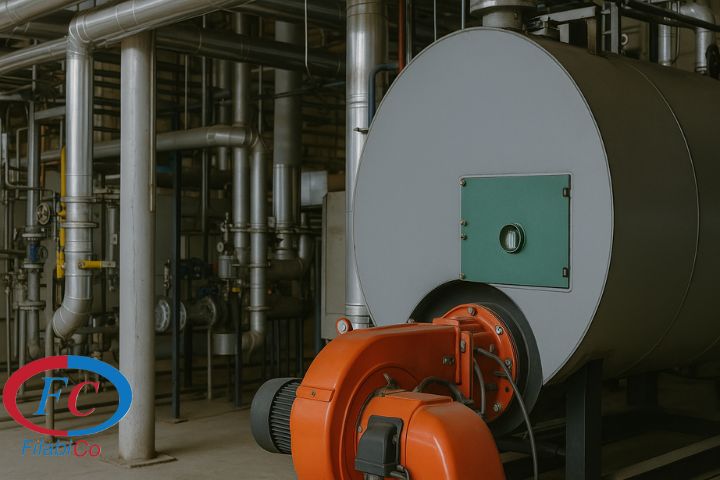
If your steam plant is still dumping hot condensate down the drain, you are literally throwing away fuel, water, treatment chemicals and boiler life. The importance of condensate return in boiler systems comes down to one simple idea: every kilogram of condensate you recover is energy and money you don’t have to buy again.
Why Condensate Return Matters
| Aspect | What it means in practice | Why it matters for your boiler system |
|---|---|---|
| Energy recovery | Reusing hot condensate instead of cold make-up water | Cuts fuel consumption and improves efficiency |
| Water & chemical savings | Less fresh water and fewer treatment chemicals required | Reduces operating costs and environmental impact |
| Lower blowdown losses | Cleaner feedwater with fewer dissolved solids | Less heat wasted through blowdown |
| Boiler & piping longevity | Gentler thermal cycling and better water quality | Extends life of boilers, valves and condensate lines |
| System reliability | Stable steam supply and fewer upset conditions | Fewer trips, smoother operation, less downtime |
What condensate return really is – and why it’s so valuable
In a boiler system, steam leaves the boiler, delivers heat to a process or heating coil, and then condenses back into liquid water. That hot water is condensate. From an energy perspective, condensate is not “waste”; it is a valuable medium that still contains a significant percentage of the energy originally put into the steam, plus boiler treatment chemicals that have already been paid for.
When you choose to send that condensate to the drain and replace it with cold, untreated make-up water, the boiler has to:
- Heat the new water all the way from ambient to boiling
- Bring it up to operating pressure
- Re-dose it with oxygen scavengers and other chemicals
From a cost standpoint, this is the worst possible choice. That is why the question “Why return condensate to the boiler operation?” has such a straightforward answer: because it is one of the fastest ways to reduce the true cost of steam.
What industry experts say about condensate return
Specialist boiler contractors consistently emphasize that condensate return systems are not “extras” but core infrastructure. Rasmussen Mechanical Services describes how easy it is to overlook this part of a plant, even though it directly influences fuel bills and reliability.
According to www.rasmech.com website:
“Condensate return systems are an often-overlooked part of a boiler system that allow you to recover valuable BTUs within your system.”
This perspective matches what many facilities discover during energy audits: the steam generation side may be carefully monitored, but the return side quietly leaks energy through uninsulated lines, failed traps and open drains.
Engineering firms that specialize in steam, such as Inveno Engineering, quantify just how much is at stake. Their best-practice guidance explains that returning hot condensate instead of replacing it with cold, raw water reduces fuel, water, sewer and chemical costs across the entire plant. According to Inveno Engineering website:
“A significant amount of savings can be achieved by returning condensate instead of replacing it with raw, untreated water.”
In many industrial facilities, simply improving the condensate return rate towards 80–90% of generated condensate can unlock substantial annual savings and measurably lower the plant’s carbon footprint.
Key benefits of returning condensate to the boiler operation
To understand the importance of condensate return in boiler systems, it helps to break the benefits into four practical categories.
First, energy savings. Condensate typically returns to the boiler house at temperatures between roughly 130 °F and 220 °F, much hotter than typical make-up water. Every degree the feedwater starts hotter is a degree the burner does not have to supply, which directly reduces fuel use.
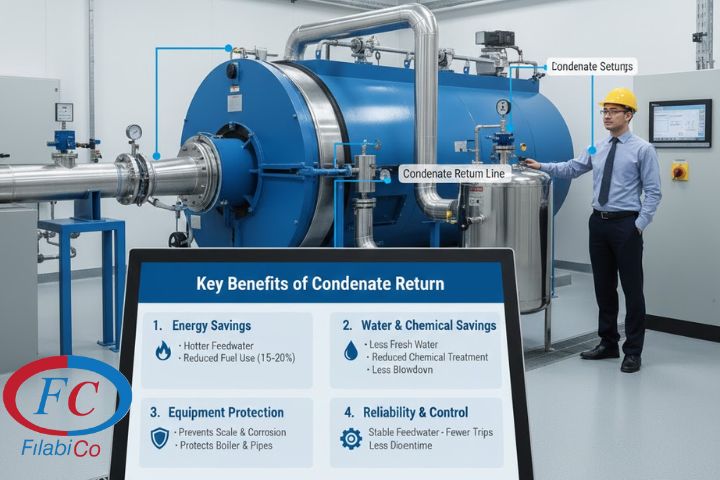
Second, water and chemical savings. When you recover condensate, you also recover water that has already been treated. That means you buy less fresh water and fewer chemicals, and you send less water—and less heat—down the drain through blowdown.
Third, equipment protection. High return rates and proper condensate treatment keep dissolved solids and oxygen under control, which helps prevent scale, corrosion and water hammer. That protects boiler tubes, feedwater lines, condensate piping, traps and pumps.
Fourth, reliability and control. A stable, well-managed condensate return system gives more predictable feedwater temperatures and flows, which helps burners, feedwater control valves and level controls operate in a smoother, more stable way. That translates into fewer trips and less unplanned downtime.
Summarized in practical terms:
- You burn less fuel for the same steam output
- You buy and treat less make-up water
- You extend the life of expensive steam and condensate equipment
All three contribute directly to lower life-cycle cost of your boiler system.
Best practices for an efficient condensate return system
Once you accept the value of condensate, the next step is to design and maintain a system that actually returns it efficiently. Industry best practice documents highlight several recurring themes.
A well-designed system will:
- Collect condensate effectively
Steam traps must be sized and installed correctly so they discharge condensate and non-condensable gases without wasting live steam. Poor traps flood coils and heat exchangers, create water hammer, or blow steam directly into return lines. - Protect piping and equipment
Condensate lines should be correctly pitched, sized and supported, with materials selected to resist carbonic acid corrosion. Key sections need insulation to minimize heat loss on the journey back to the boiler. - Match pumps to operating conditions
Condensate pumps must be selected with proper net positive suction head (NPSH) for high-temperature condensate. Undersized or misapplied pumps suffer cavitation, leading to noise, vibration and early failure. - Monitor quality and contamination
Where there is a risk of process contamination, conductivity meters and dump valves may be required to divert suspect condensate safely away from the boiler until the problem is fixed.
In practice, raising the question inside your plant—“Why return condensate to the boiler operation instead of draining it?”—often reveals a mix of quick wins (closing open drains, repairing traps) and longer-term projects (insulating lines, upgrading pumps and receivers).
How an engineering-led partner can help
For many sites, the challenge is not recognizing the importance of condensate return, but finding the time and expertise to redesign and upgrade an existing system while operations continue. That is where an engineering-focused HVAC and boiler partner adds real value.
An experienced team can:
- Map your current steam and condensate flows and quantify losses
- Identify corrosion, water hammer, and venting issues
- Redesign receivers, pumps and piping to increase the percentage of condensate returned
- Integrate controls and monitoring so you can track return performance over time
FilabiCo, for example, brings more than four decades of engineering-led HVAC and boiler solutions across the GCC, supporting clients from concept and design through installation and lifetime maintenance. Filabico A partner with that level of experience can help you turn condensate return from an overlooked afterthought into a strategic asset that improves both efficiency and reliability.
By treating condensate as the valuable resource it is, and by investing in the right design, maintenance and monitoring practices, you can dramatically cut the true cost of steam while extending the life of your boiler plant. That is the core of the importance of condensate return in boiler systems: it is not just a piping detail; it is one of the most powerful levers you have to improve performance, reduce risk and protect your investment.