


Articles
HVAC troubleshooting guide for facility managers

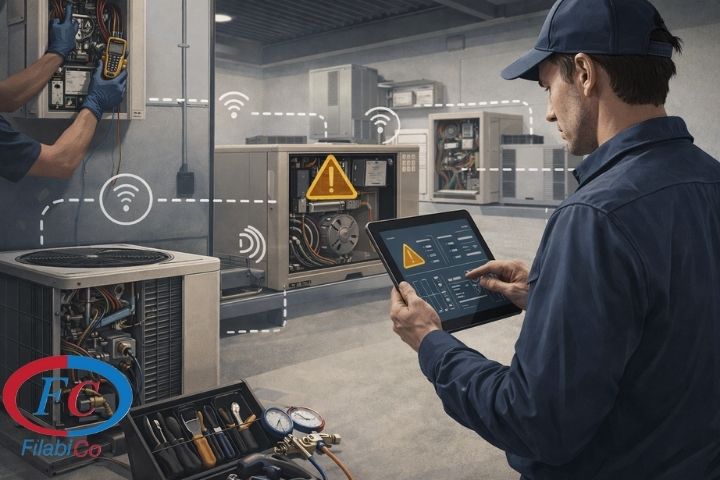
When a building goes hot or cold at the wrong moment, it feels like an emergency—but most issues follow predictable patterns. With a structured HVAC troubleshooting process, facility managers can quickly separate simple fixes from problems that demand a technician, avoid panic and keep occupants comfortable.
symptoms, checks and next steps
| Symptom | First checks you can do safely | When to call a professional |
|---|---|---|
| No heating or cooling | Power, breakers, thermostat mode/setpoint | Repeated breaker trips, no response to reset |
| Poor airflow / some rooms stuffy | Filters, blocked grilles, outdoor unit clearance | Suspected duct leaks, failed fans or motors |
| System runs but comfort is poor | Temperature setpoints, schedules, zone valves/dampers | Suspected refrigerant issues or control faults |
| Strange noises or smells | Loose panels, debris around indoor/outdoor units | Burning smells, grinding or banging noises |
| Frequent faults and alarms | Confirm recent work, basic resets, BMS alarms history | Recurring fault codes, safety lockouts |
What HVAC troubleshooting really means in a commercial building
In a complex site—offices, clinics, malls or mixed-use projects—HVAC troubleshooting is less about guesswork and more about following a disciplined sequence of observations and checks:
-
Confirm the complaint (where, when, how often).
-
Check fundamentals (power, controls, airflow).
-
Look for obvious mechanical or electrical red flags.
-
Decide whether the issue is operational, minor maintenance or a genuine fault.
Residential guides echo the value of this structured approach. Down East Heating & Air Conditioning points out that many comfort problems can be handled by simple checks before anyone books a service visit. According to Down East Heating & Air Conditioning:
“With a few simple HVAC troubleshooting steps, you can often spot the issue and fix minor problems on your own.”
For facility managers, the same logic applies—only the systems are larger, the loads are higher and the consequences of downtime are bigger.
Core checks every facility manager should know
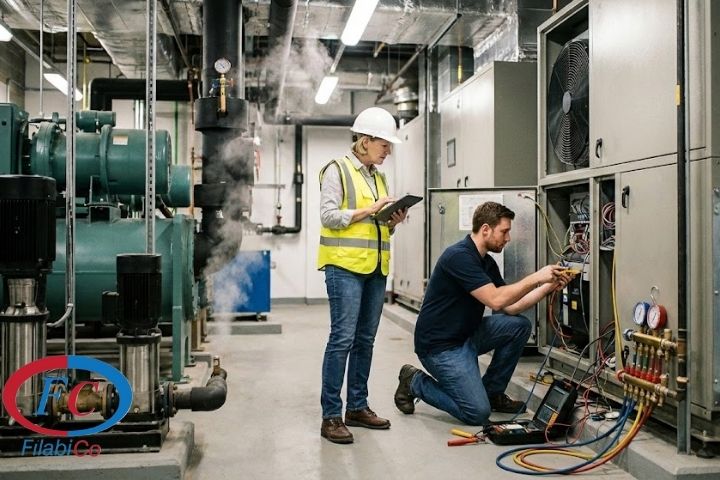
Engineers and technicians handle detailed diagnostics, but frontline staff can resolve a surprising number of complaints by focusing on a few fundamentals.
Before diving into advanced diagnostics, make sure these basics are covered:
-
Thermostats and control setpoints – Confirm modes (heat/cool/auto), time schedules and manual overrides. A room “not cooling” may simply be on setback or in the wrong mode.
-
Airflow paths – Verify that supply and return grilles are open and unobstructed, and that dampers or fire/smoke devices have not been left shut after works.
-
Filters and strainers – Check filter-clog alarms, differential pressure readings, or simply the maintenance log; severely dirty filters can mimic more serious mechanical issues.
These checks are low-risk and often resolve symptoms without tools. They are also easy to build into daily rounds or digital checklists, especially in buildings already investing in HVAC maintenance programs.
American Standard’s consumer guide emphasizes the same idea at residential scale: start with thermostat settings, breakers, filters, vents and debris around the outdoor unit before assuming the equipment is failing. According to American Standard website:
“Choose your unit, system, or component for details on what’s causing your issues and how you can resolve them.”
The principle scales well to commercial portfolios: match each symptom to a short, well-documented checklist so staff know exactly what to check first.
Using smart tools and data to troubleshoot faster
Modern control systems and connected devices can make HVAC troubleshooting faster and more precise. Instead of relying only on comfort complaints, facility managers can use live data trends and alerts to identify issues before tenants even notice them.
In buildings that have already adopted smart HVAC systems, you may have access to:
- Real-time graphs of temperatures, humidity, airflow and valve positions in each zone
- Equipment-level data such as fan speeds, coil temperatures and compressor runtimes
- Alarm histories that show when a fault first appeared and how often it has returned
Layering IoT connectivity on top of this—true smart HVAC IoT—extends visibility beyond the local BMS. Cloud platforms can aggregate performance from multiple sites, highlight recurring patterns and help operations teams spot systemic issues such as persistent low airflow in one branch of a portfolio.
For owners and consultants who are choosing Oman HVAC solutions for new projects, this is becoming a key design decision: will the system provide the data and remote access that future troubleshooting and optimization will rely on?
A partner like Filabico, with more than four decades of experience delivering smart, energy-efficient HVAC solutions across commercial, residential and industrial buildings in the GCC, can help ensure that diagnostics, monitoring and controls are built into the system from day one rather than bolted on later.
Turning patterns into a troubleshooting playbook
Once you start capturing and organizing incidents, it quickly becomes clear that many problems repeat. Building a simple playbook turns those patterns into a training tool.
Think about structuring your internal guide around:
- Common symptoms (“hot/cold complaints in one zone”, “unit short-cycling”, “repeated filter alarms”).
- Likely causes (controls, airflow, hydraulics, refrigerant, sensor errors).
- Recommended first steps for the on-site team versus actions reserved for technicians.
This playbook should work alongside your digital systems: when an alarm appears, the on-screen help or internal knowledge base can point staff to the exact page or flow chart to follow.
Over time, this kind of structured HVAC troubleshooting culture reduces guesswork, speeds up resolution and makes it easier to onboard new team members in large facilities.
When to stop DIY and call a professional
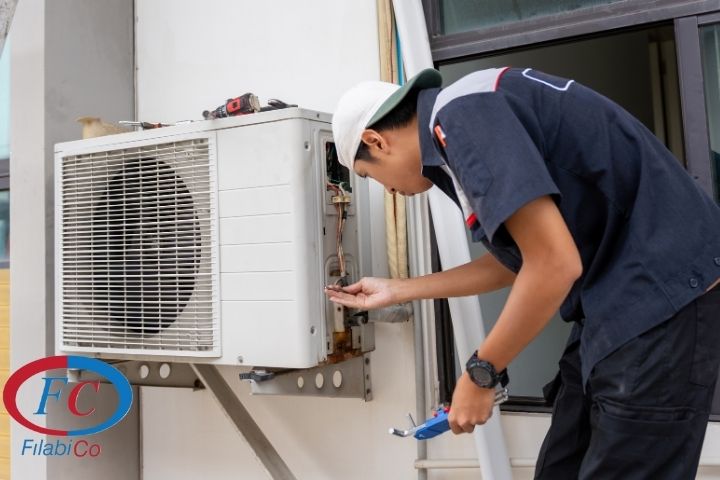
Finally, it is crucial to define the boundary between safe in-house checks and work that must be handled by licensed technicians. As a rule of thumb, anything involving:
- Live electrical work beyond simple breaker checks
- Refrigerant circuits, leak tests or charge adjustments
- Gas piping, combustion tuning or flue systems
- Intrusive work on pressure vessels or safety devices
should be escalated immediately to qualified HVAC professionals. This protects both staff safety and equipment warranties.
Many residential guides stress the same point: simple DIY checks are fine, but once you suspect internal component failure, it is time for an expert. Residential or commercial, the logic is identical; your role as a facility manager is to recognize the limits of safe troubleshooting and ensure the right expertise is called at the right time.
When you combine good data, clear checklists, connected controls and a reliable service partner, HVAC troubleshooting stops being a crisis response and becomes a manageable, repeatable process that keeps your building comfortable and your equipment healthy.