
Articles
Green HVAC Design for LEED-Compliant Buildings

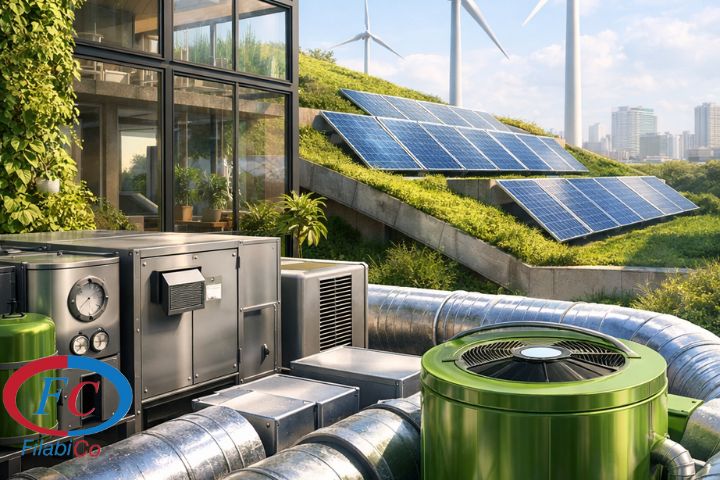
Green HVAC Design helps commercial buildings meet LEED and other sustainability standards by cutting energy use, improving indoor air quality and reducing long-term operating costs. In practice, it means designing HVAC systems that work with the building—not against it—while delivering reliable comfort and measurable environmental performance.
At-a-glance: how green HVAC supports sustainable buildings
| Design focus | Green HVAC approach | Sustainability impact |
|---|---|---|
| Energy efficiency | High-efficiency chillers, VFDs, optimized zoning | Lower energy intensity and carbon emissions |
| Indoor air quality | Demand-controlled ventilation, better filtration | Healthier occupants, higher LEED IAQ credits |
| Controls & monitoring | Smart sensors, automation, analytics | Continuous optimization and fault detection |
| Lifecycle performance | Durable equipment, service-friendly layouts | Lower total cost of ownership |
| Climate responsiveness | Designs adapted to local weather and loads | Stable comfort in hot climates like Oman |
What Green HVAC Design really means
At its core, Green HVAC Design is about balance. Instead of oversizing equipment “just in case,” engineers carefully match capacity to realistic loads, integrate efficient components and design airflow and water systems that minimize losses. The result is a system that meets comfort needs while consuming fewer resources.
Academic research consistently shows that HVAC design and operation play a decisive role in green buildings. Studies published on ResearchGate highlight that energy-efficient HVAC strategies—when integrated early in design—are among the most effective ways to reduce overall building energy consumption. According to published research on researchgate.net:
“HVAC systems have a dominant influence on the energy consumption and indoor environmental quality of green buildings, making their design and operation critical to sustainability goals.”
This reinforces a key lesson: sustainability is not an add-on. It starts with HVAC decisions made at concept stage.
Aligning HVAC with LEED requirements
LEED and similar rating systems reward projects that demonstrate measurable performance. HVAC design directly affects multiple credit categories, including energy and atmosphere, indoor environmental quality and innovation.
Before diving into specific technologies, it helps to understand how HVAC contributes across these areas. In simple terms, a well-designed system should:
- Reduce energy demand through efficient equipment and smart control strategies
- Maintain healthy indoor air with controlled ventilation and filtration
- Support commissioning, monitoring and ongoing verification
Industry guidance on sustainable HVAC practices emphasizes that efficiency alone is not enough; systems must also be easy to operate and maintain over their entire lifespan. Tritech Energy notes that sustainable HVAC practices combine efficient equipment, intelligent controls and proper maintenance to achieve long-term performance rather than short-term gains. According to Tritech Energy website:
“Sustainable HVAC systems focus on reducing energy consumption, improving indoor air quality, and ensuring long-term operational efficiency through smart design and maintenance.”
Smart controls and data-driven performance
Modern green buildings increasingly rely on smart HVAC IoT solutions to move from static efficiency to continuous optimization. Sensors, connected controllers and analytics platforms allow systems to adapt to real occupancy patterns, weather changes and equipment condition.
With smart controls in place, operators can detect inefficiencies early, rather than waiting for comfort complaints or high utility bills. This also simplifies HVAC troubleshooting, because data trends often reveal whether an issue is caused by controls, airflow imbalance or mechanical wear.
For owners planning new developments or major retrofits, this level of intelligence is now part of selecting the Right HVAC System for Your Commercial Building—not just in terms of hardware, but in how the system will be monitored and optimized over decades.
Designing for hot-climate sustainability
In regions like Oman and the wider GCC, climate places exceptional demands on HVAC systems. High ambient temperatures, humidity and long cooling seasons mean that even small design inefficiencies can translate into large energy penalties.
That is why choosing Oman HVAC solutions requires more than copying international templates. Localized green HVAC design typically focuses on:
- Efficient cooling plants sized for realistic peak loads
- High-performance envelopes and shading to reduce heat gain
- Control strategies tuned for extended cooling operation
When these elements are aligned, sustainability goals become achievable even in demanding climates.
Filabico, with decades of experience delivering energy-efficient HVAC solutions across commercial, residential and industrial projects in the region, emphasizes integrated design, smart controls and lifecycle thinking to help buildings meet sustainability targets without compromising reliability.
From design intent to long-term results
One of the most common gaps in green projects is the distance between design intent and actual operation. A system may be specified to meet LEED criteria, yet underperform if it is poorly commissioned or inconsistently maintained.
Closing this gap requires:
- Clear documentation of control strategies and setpoints
- Proper commissioning and seasonal testing
- Ongoing review of performance data and maintenance practices
When design, controls and operations work together, green HVAC systems deliver on their promise: lower energy bills, healthier indoor environments and compliance with international sustainability standards.
Why Green HVAC Design is a strategic decision
Ultimately, Green HVAC Design is not just about points on a certification checklist. It is a strategic investment in building value, occupant wellbeing and regulatory readiness. As energy costs rise and sustainability expectations tighten, buildings with efficient, intelligent HVAC systems are better positioned to remain competitive.
By integrating proven design principles, smart technologies and climate-appropriate strategies from the outset, project teams can create HVAC systems that support both environmental responsibility and long-term operational success.